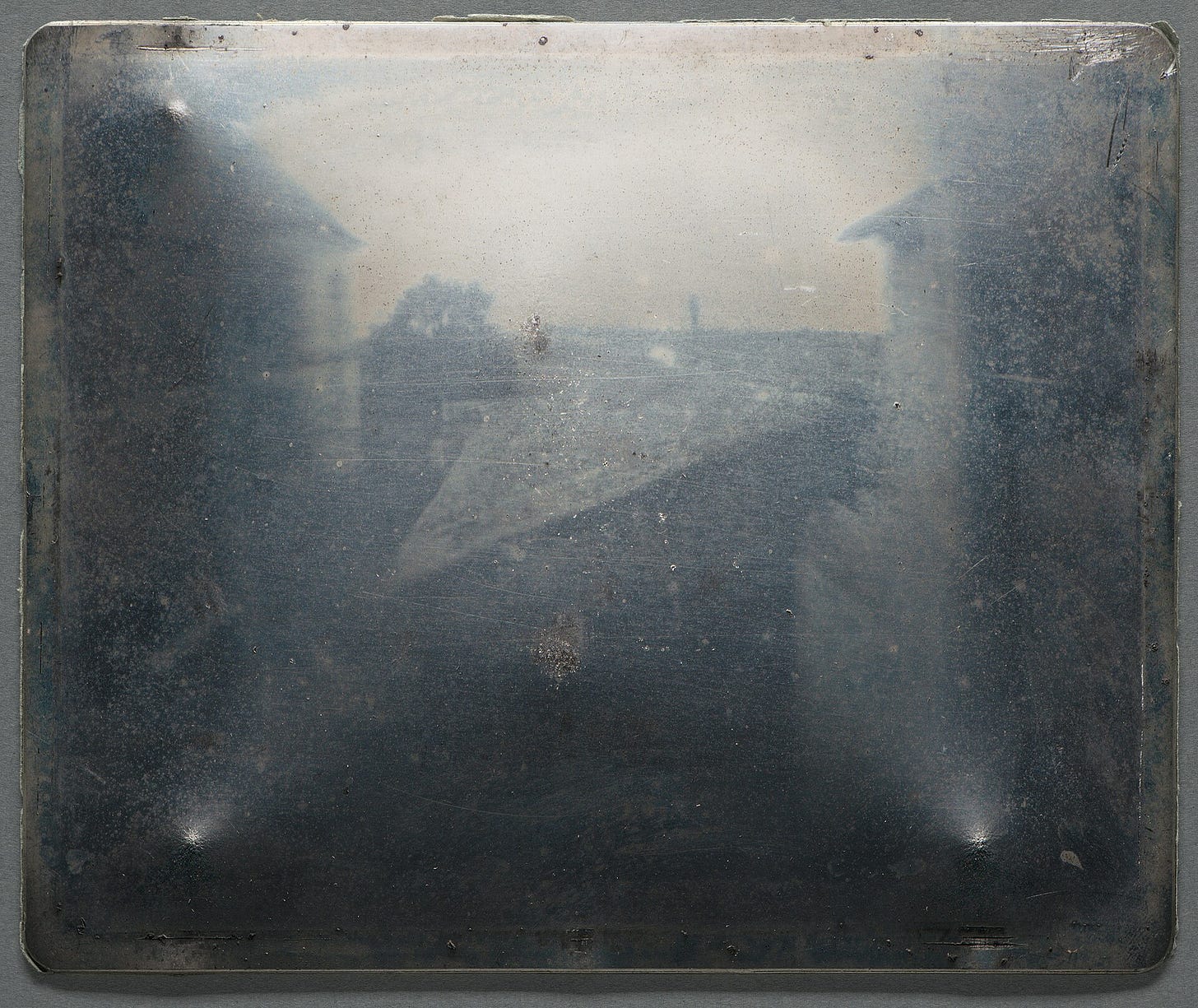
How Photography Works In My Head #4: Teaching Photography to Brains That Work Differently

Photography instruction assumes cognitive uniformity. Teachers describe their own process and expect students to replicate it. “Learn to see the light.” “Pre-visualise the image.” “Feel the moment.” These instructions make perfect sense if your brain works like the teacher’s brain, but they become incomprehensible if it doesn’t.

Al fresco bath tub
Continue reading “How Photography Works In My Head #4: Teaching Photography to Brains That Work Differently”

Live Photography is About Life

I can tell you exactly how I felt standing on a sand dune in Morocco many years ago, watching my wife photograph a sand dune through evening light. I remember the temperature, the angle of the sun, the smell of dust. I remember the specific quality of happiness that comes from being exactly where you want to be with exactly who you want to be there with. That moment is still accessible to me. I was there. It happened. The photos prove it.

Dunes in Morocco at sunset, Christmas 2017
Continue reading “Live Photography is About Life”

How Photography Works In My Head #3: Why Some Photographers Can’t Write About Their Work

Photography education and criticism privilege verbal articulation. You’re expected to be able to explain your work, discuss your influences, articulate your intentions, write artist statements. Grants and residencies require written proposals. Publications want accompanying text. Teaching positions demand that you can explain your process clearly.

But many talented photographers can’t write coherently about their work, and it’s not because they haven’t thought deeply about it or because they’re inarticulate generally. It’s because the work happens in a non-verbal mode and translating it into words requires cognitive machinery they don’t have or have configured differently.

Logs
Continue reading “How Photography Works In My Head #3: Why Some Photographers Can’t Write About Their Work”

I Stole Every Photograph I’ve Ever Taken

Not legally, though we’ll get to the murky ethics of that. I mean conceptually, technically, aesthetically. Every image I’ve made is somewhere on a spectrum between homage and plagiarism, filtered through techniques I borrowed from photographers who borrowed them from other photographers who borrowed them from painters who probably borrowed them from someone else. Nothing I’ve done is original. I’m not sure anything in photography is.

Administration du cirque: man at work
Continue reading “I Stole Every Photograph I’ve Ever Taken”

Photos I Found #1: Spain August 1966 #1

I like to get my hands on photographs that people have discarded. These meant something to someone at some point, and it pains me to see that they’re being thrown away now.

I’ll start a series of posts about these photos as I scan them. I’ll post the entire rolls since I can’t know what the intent of the original author was.

This series contains photos taken from a few places around Spain in August 1966 according to the negatives jacket. Most are from Barcelona and surroundings, but not all.

Continue reading “Photos I Found #1: Spain August 1966 #1”

How Photography Works In My Head #2: The Visualisers and the Engineers

Ansel Adams talked about pre-visualisation as the foundation of his photographic method. He could see the final print before making the exposure, knowing exactly what the image would look like after development and printing. Not just approximately but precisely. The vision came first, complete and detailed, and the technical process existed to manifest that internal image in physical form.

If you can do that, if you can see the finished photograph in your mind before you press the shutter, your entire approach to photography centres on capturing that vision. You’re trying to match what you see in your head with what the camera records. The image exists first internally, then you make it real through technical execution. Vision precedes and guides craft.

Sunrise on the rocks
Continue reading “How Photography Works In My Head #2: The Visualisers and the Engineers”

The Four Kinds of Photography (And Why Their Collapse Is More Dangerous Than AI)

Photography isn’t one thing anymore. It hasn’t been for a while, but we’re still using the same word for fundamentally different activities, which creates confusion about what’s happening to the medium and why it matters.

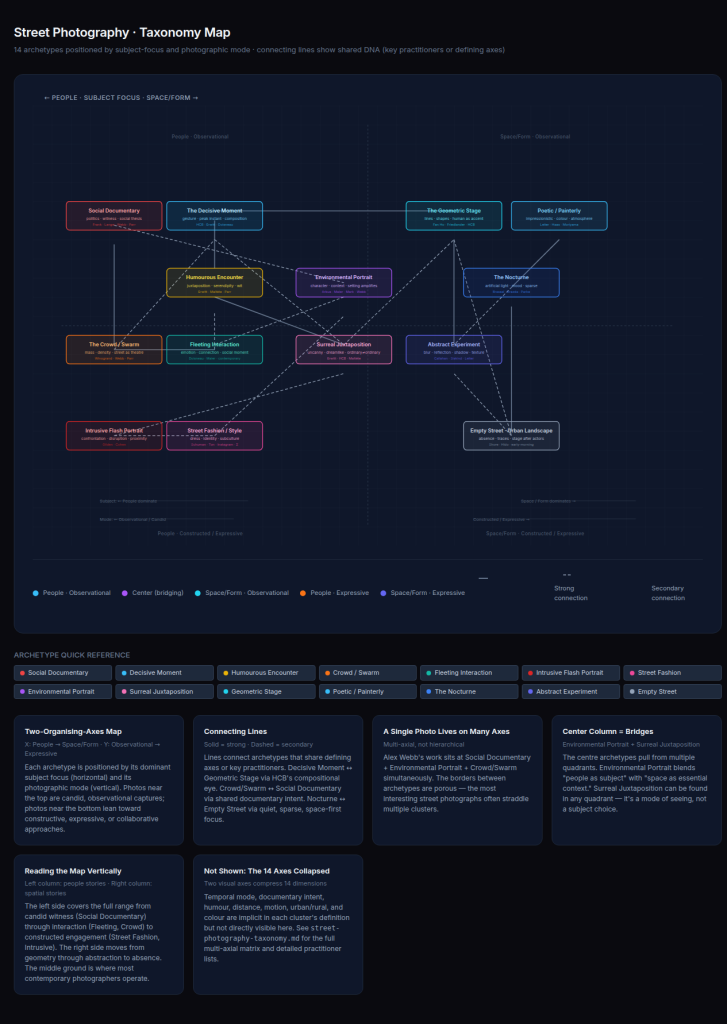
There are four distinct categories of photography now, defined by who makes the image and who consumes it. Understanding these categories and how they’re bleeding into each other is more important than endless hand-wringing about what AI generation does.

Blank
Continue reading “The Four Kinds of Photography (And Why Their Collapse Is More Dangerous Than AI)”

Kodak DC200 (ca. 1998-1999)

Josh Warner posted on Substack photos he took with a Kodak DC210A he bought for next to nothing on a flee market.

This was a version of my first digital camera (mine was a DC200) I bought with one of my first salaries in the UK as I was working on a post doc project.

I dug up some old photos from my archive taken with that camera. I only have a few since I had it stolen very quickly after I bought it (it was in my rucksack, with my ID papers, my wallet, and my house keys).

Most of these were taken around Edinburgh, where I lived at the time. I seem to have shot in low resolution (640×480) because storage was at a premium in the 90s (and note that these images survived nearly 30 years in my archives without cloud storage!). They are unmodified, as they came out of the camera at the time.

Kodak DC 200 Plus (not my photo)

How Photography Works In My Head #1: Anendophasia, Aphantasia, and Photography

Most people assume everyone thinks the same way they do. They imagine that when you say “picture this in your mind,” everyone experiences roughly the same thing. When you say “think about it,” everyone has the same internal process. But cognitive variation is enormous, and these differences fundamentally change how you approach photography.

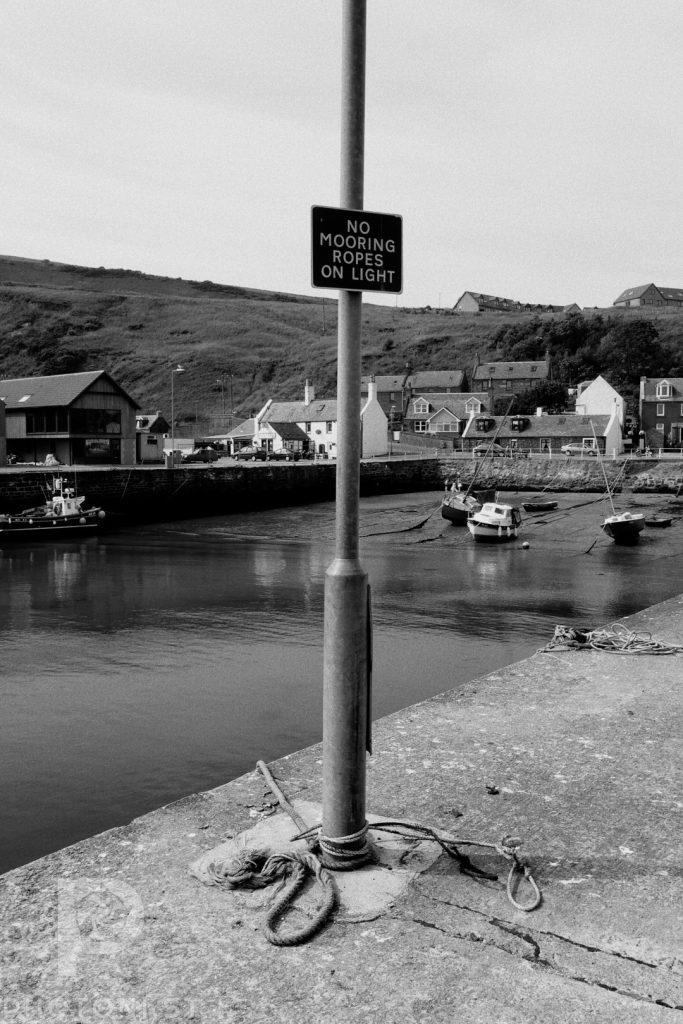
Rope and boat
Continue reading “How Photography Works In My Head #1: Anendophasia, Aphantasia, and Photography”