
When I go out to take photographs, it can go two ways depending on location, days, and my mood:
- The busy hectic version: walking down busy streets (not near my house, obviously, but when I’m in Paris or another city). Everything is moving, there are people doing things everywhere, and the game becomes finding a way to capture something before it disappears. Checking the screen often, but knowing that during that time something else might happen, wondering all the time if I should switch lens (I like wide, but sometime you’re just a bit too far). It’s absolutely exhausting.
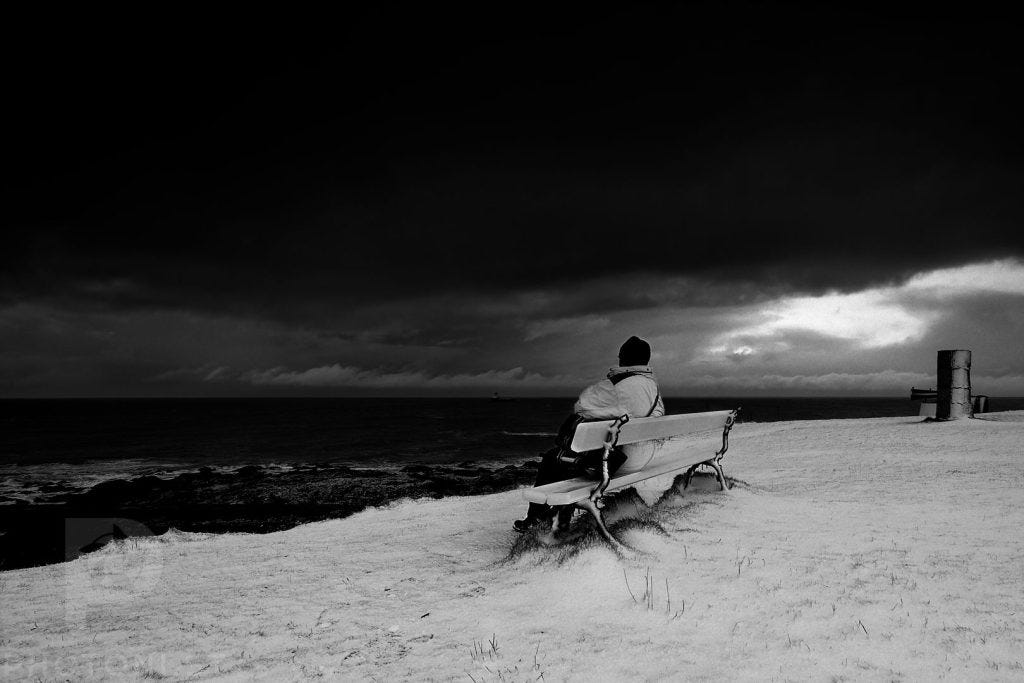
- The calm version: sitting on a bench somewhere, watching a quiet landscape, thinking about what would be the most interesting thing to capture. Plenty of time to make decisions, no plans, just watching and considering. It’s relaxing.
I’m pretty sure everyone has had both experiences over time.
There are endless street photography videos that explain how to handle the hectic, how to plan ot react to things happening, and how to be prepared. These tend to drift toward hardware considerations very quickly (high ISO sensitivity, lots of megapixels for drastic cropping, fast lenses even though it’s pretty pointless in the street unless you do portraits).
But these to me discuss the wrong question. The real question is how do you handle what’s happening in your mind.
I’ve been a software engineer for over 30 years (yes I’m old). I’ve had plenty of additional responsibilities on the way, but I still consider myself down with the foot soldiers, especially when it’s needed when things go wrong. I’m used to work in a special state of mind: deeply focused, unaware of outside distractions, no interaction with anyone, even forgetting to eat and sleep. When I was a kid, I’d be up in my bedroom for entire weekends.
You often hear software engineers complain that interruptions pull them out of what they’re doing, and it takes a long time to get back in (if at all). I remember sales droids not understanding what that meant and assuming that it was just a way for code monkeys to ignore them. After all, their stuff is more important than whatever we’d do. I even had a t-shirt saying “go away or I replace you with a very small shell script” and I’d point at it when someone came to my door.
Mihaly Csikszentmihalyi developed a theory in the 1970s. He studied people who reported deep enjoyment in their work: chess players, surgeons, rock climbers, composers. What they all described was that same state: complete absorption, loss of self-consciousness, distorted sense of time, the activity flowing by itself even when it was difficult. He called it Flow.
He identified a set of conditions that produce that state:
- Clear goals every step of the way.
- Immediate feedback on how you’re doing.
- A balance between the challenge of the task and your skill level. Hard enough that you stay engaged, but not so demanding that you feel stressed.
Photography is a perfect fit for all three.
When you’re out shooting, the goals are part of the act itself: frame what you cant to capture, get the exposure right (or on modern cameras let them do the work), click. Each frame acts as a micro-goal. The feedback is also instant (assuming you shoot digital): look at the back of the screen and judge if that looks right or not. And the skill challenge is adjustable to what you want (e.g. shoot all manual if you want, wait for different conditions) so that it’s exactly at the level you want.
But Flow is not guaranteed to happen. It’s only a set of conditions that make it possible. You can satisfy all of them, and still never reach the state of Flow. Sometimes you’re at the beach early in the morning, everything is quiet, you know exactly what you want, you have instant feedback on the camera, you’ve done this dozens of time, but things don’t click. Something is in the way.
That something is the difference between using photography as a tool for Flow, and using it as a tool for validation. If when you go out you’re desperate to get a good photo out of your outing, if what you want is to prove something to you or to the world, you turn your camera into a production device with targets and deliverables. And that device no longer helps you get into the Flow.
There’s a tradition called Miksang Contemplative Photography, rooted in Tibetan Buddhist practice. The word means “good eye”, as far as I know. In photography, it translates as “don’t go looking for photos”. You sit still somewhere, and wait for something interesting to you happens. Then you photograph it. That’s it. No searching, no hunting, no pressure, no evaluation afterwards. I first got into the idea when a fellow photographer on substact whose name I forgot (sorry) had a broken leg and decided to sit at a cafe’s table all day and take the photographs that came to him instead of hunting for them.
And in that waiting, something happens to your attention. It opens. It stops being on the hunt for something. You stop scanning for opportunities and start receiving what’s already there. In a way you get close to tapping into the Default Mode Network. The next time you go out to shoot, try arriving without a goal. Leave the zoom lens at home. Pick one focal length. Sit somewhere: a park bench, a cafe window, a street corner. Stay still for twenty minutes. Resist the urge to look for photographs. Simply look at things. When something holds your attention, raise the camera.
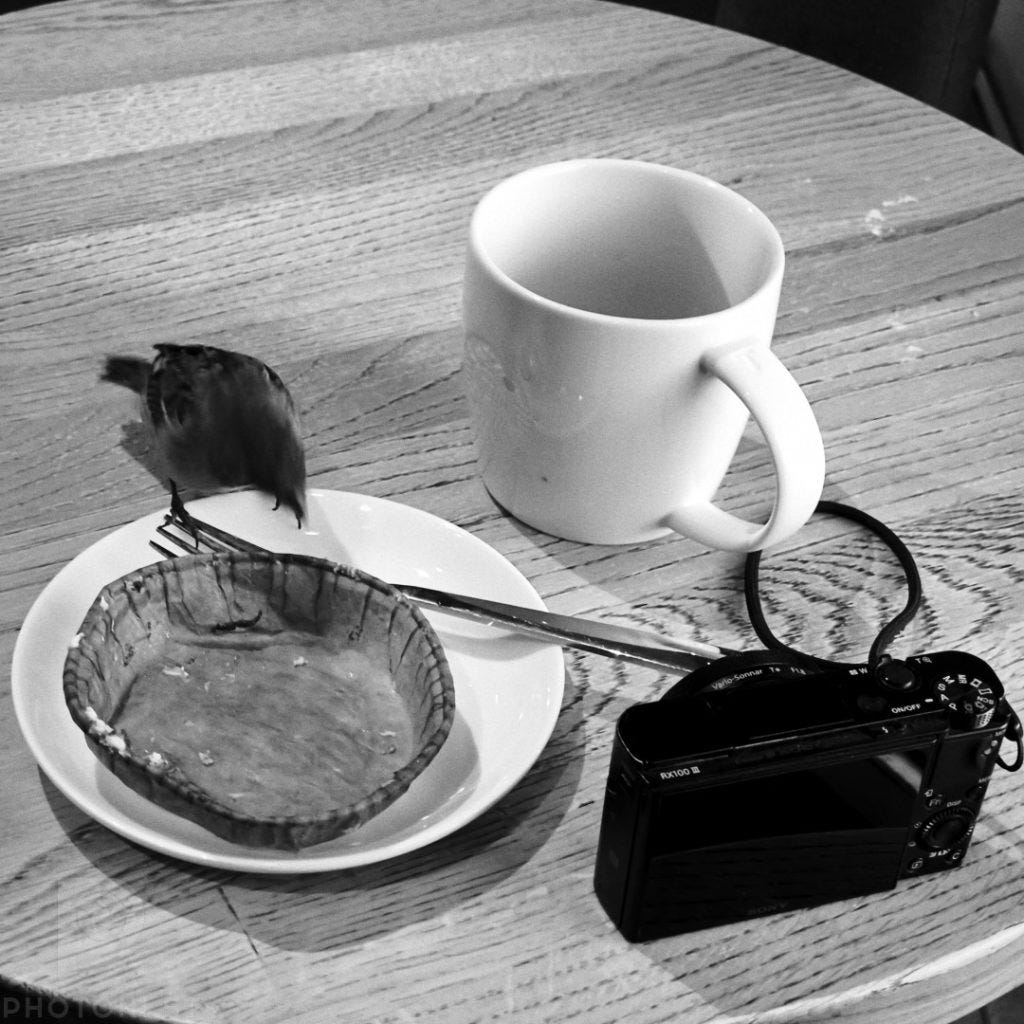
Obviously, you’ll discover that most of what you shoot in that state of mind is unremarkable. A coffee cup. Someone walking past. A bird. These aren’t portfolio worthy. But you stop judging them. You stop evaluating against build standards and deliverables. And without that evaluation, the drain of the hectic energy disappears. You just relax taking photos.
Obviously that’s not the only way of shooting. And you don’t have to be in the Flow either. Sometimes you have to work quickly, under external constraints, or according to someone else’s standards. That’s just the way it is. But when things become too much, remember you can pause and you don’t need to deliver. The frantic pursue of results and keepers isn’t sustainable.
The camera doesn’t decide which experience you have. It’s just the tool. Go find a quiet place. Give it twenty minutes. See what happens.
#Photography #Opinion #IMayBeWrong #Flow