
I’ve been thinking about how photographers develop over time. Looking at what I’ve been writing over the last few months, I see contradictions and incoherencies that bother me. So I set out to find the underlying thinking or framework that would unify these ideas.

There’s a tempting narrative that treats development as linear progression: you start with pretty pictures, move to documentary work, eventually arrive at raw anti-aesthetic that rejects beauty entirely in favour of pure content. This trajectory describes some photographers’ paths, including mine; it correlates pretty well to what I’ve been through over the last couple of years. But framing it as natural evolution suggests everyone should move this way, with raw anti-aesthetic as the advanced endpoint.
I don’t think that’s right. The development is more complex and less predetermined. What actually happens is that meaning emerges gradually through practice whilst aesthetic choices evolve from unconscious to conscious. These processes happen in parallel, informing each other, producing wildly different results for different photographers depending on what meaning emerges and what aesthetic choices serve it. Not only is there no linear progression, but there are two distinct yet interacting progressions that make it hard to untangle the ideas.
When you begin photographing, meaning isn’t yet available to you. There’s no clear sense of what you’re trying to say, no developed understanding of your own seeing or what genuinely interests you. Basic craft comes first: how to use the camera, how to compose, how to make technically competent images. Clear goals are needed, and they can’t yet depend on meaning you haven’t discovered.
Pretty pictures work perfectly at this stage. Beauty is accessible, immediately recognisable, provides clear feedback about whether you’ve succeeded. You can look at a beautiful landscape photograph and know it’s beautiful. The criteria are relatively objective and the satisfaction is immediate. You’re developing technical capability and visual awareness whilst meaning emerges gradually through accumulated experience.
The beauty serves as motivation and measure of success without requiring you to know why you’re photographing beyond “this is beautiful and I want to capture that.” That’s sufficient for learning. You’re not making shallow work because you’re shallow; you’re making accessible work because you’re learning, and beauty is the most accessible positive quality images can have.
But pretty pictures have limitations that become apparent once you’ve made enough of them. They’re often emotionally shallow. The beauty is the entire point, which means there’s nothing beneath the surface to discover. Once you’ve registered that something is beautiful, you’re done with it. The work offers no resistance: no ideas to grapple with, nothing underneath asking for attention. After making hundreds or thousands of beautiful images, that shallowness starts to feel unsatisfying.
That dissatisfaction isn’t failure; it’s evidence that meaning is beginning to emerge. Patterns become visible in what you’re drawn to once you’ve photographed enough: certain kinds of light keep appearing, or people in particular situations, or specific relationships between elements. Those patterns reveal what actually interests you beneath the conscious choices you’ve been making.
This emergence can’t be forced and it can’t be predicted. You have to make the work before you understand what the work is about. Meaning doesn’t get imposed from outside. It reveals itself through the accumulated evidence of what you’ve actually been photographing when you thought you were just making pretty pictures or learning technique.
Once meaning starts emerging, you become conscious that you’re trying to communicate something beyond beauty. Perhaps you’re drawn to documenting how people occupy public space, or interested in the traces they leave in environments, or fascinated by how light transforms ordinary objects into something strange. Whatever it is, it’s yours, emerged from your particular way of seeing rather than inherited from photography tradition.
This is when aesthetic choices can become strategic rather than default. Pretty pictures are no longer the only target; the aim shifts to deliberate choices that support the meaning you’ve discovered you care about. That meaning might require beauty. It might require rawness, formal precision, deliberate chaos, or something in between.
The aesthetic becomes a tool in service of meaning rather than being the entire point. This is the shift from unconscious to conscious aesthetics. You’re choosing how images should look based on what serves what you’re trying to communicate, not based on received standards about what good photographs are supposed to look like.
Different photographers develop such different aesthetic approaches for exactly this reason, even when they’re equally serious and experienced. The meaning that emerges for each person is unique to their seeing and interests. The aesthetic choices that serve one photographer’s meaning might completely undermine another’s.
If the meaning that emerges for you is about bearing witness to difficult realities, documentary approaches make sense and raw aesthetics might serve that meaning by avoiding aestheticisation of suffering. Making those situations beautiful would dilute or distort what you’re trying to communicate. Roughness becomes the appropriate choice.
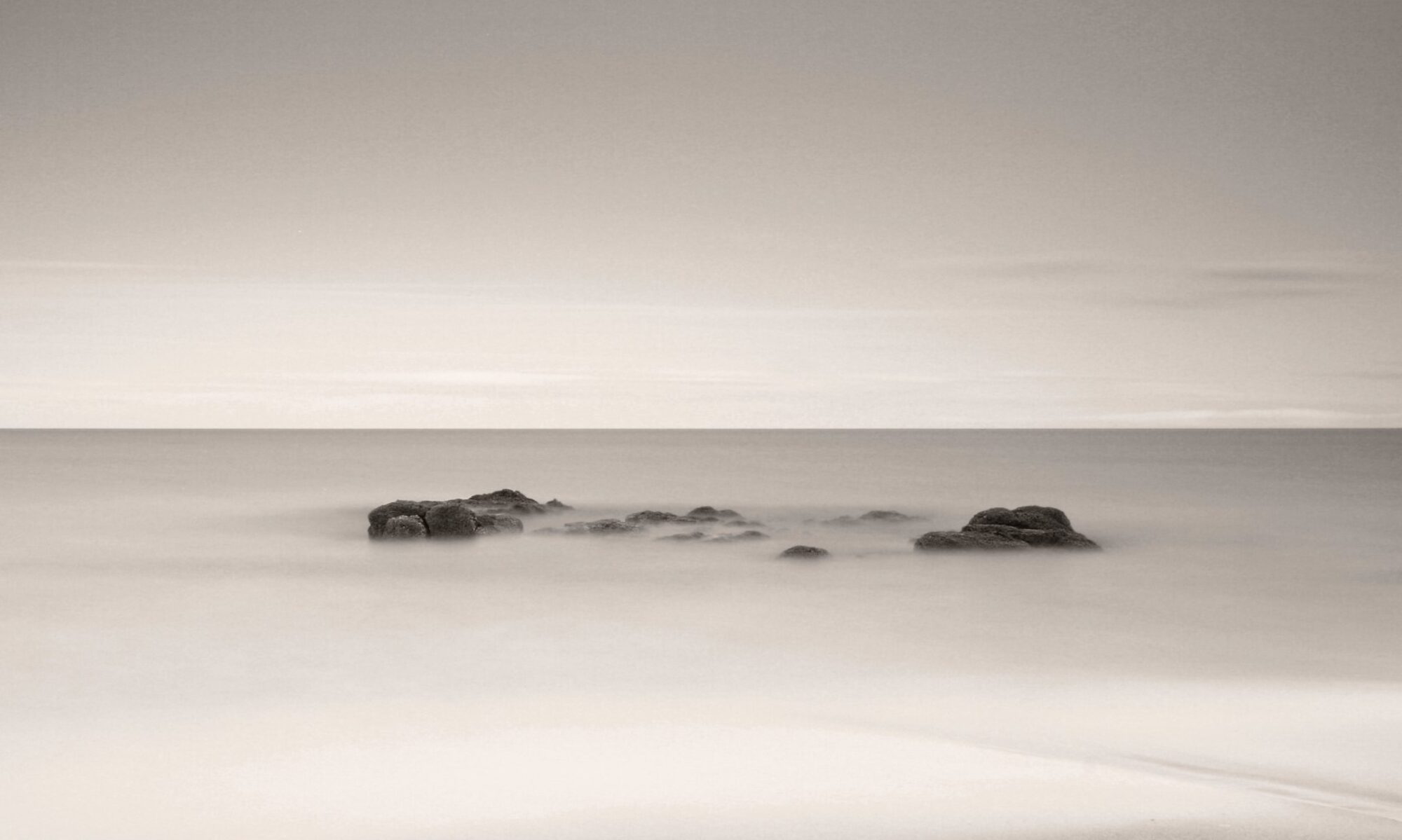
But if the meaning that emerges is about finding transcendence in ordinary moments, beauty might serve that better than rawness would. The aesthetic quality is part of what you’re communicating about how the world can be seen. Removing beauty would undermine the meaning rather than clarifying it.
Both approaches represent conscious aesthetic choices in service of emerged meaning. The difference is what meaning emerged and what serves it.
This is actually very difficult to achieve. Letting go of a style because it doesn’t support your meaning, even when it’s your favourite style, is extremely hard and requires a kind of violence against your own habits. It took me a very long time to get there and accept that sometimes my photos won’t be pleasant or aesthetically satisfying, and there is no undo.
The parallel development of meaning and aesthetics clarifies several things the linear progression model can’t. Some photographers never move away from beauty: if the meaning that emerges for them centres on beauty as a quality worth capturing, then maintaining a beautiful aesthetic isn’t limitation but alignment between meaning and method. Others who move to raw anti-aesthetic later return to beauty; they needed to prove they could work seriously without relying on it as a crutch. Once meaning had fully emerged and they’d developed confidence in it, beauty became available again as choice rather than default, no longer something they feared would make their work shallow.
Aesthetic experimentation is part of development rather than a distraction: you might try working in raw anti-aesthetic not because you’ve decided it serves your meaning but because you’re testing whether it reveals something about what you’re trying to say. Judging photographers based purely on aesthetic choices without understanding their meaning misses the point entirely. Raw anti-aesthetic isn’t inherently more serious than beauty, and beauty isn’t automatically more legitimate than rawness. What matters is whether aesthetic choices serve the meaning the photographer is trying to communicate.
The only universal evolution is from unconscious repetition of received standards toward conscious deployment of whatever serves your emerging meaning. Everyone moves from making default aesthetic choices based on what photography is “supposed” to look like toward making deliberate choices based on what serves their actual purposes. But conscious aesthetics can look like almost anything depending on what meaning has emerged.
Patience with your own development follows from all this. Meaning takes time to emerge, and you can’t rush it by skipping the pretty pictures phase or forcing yourself to work in ways that feel premature. Making the work, accumulating the evidence, noticing the patterns: that’s what allows meaning to reveal itself. It surfaces when you’ve photographed enough to see what you’ve actually been doing.
The evolution isn’t from pretty to raw. It’s from unconscious to conscious: default choices give way to deliberate ones, borrowed aesthetics to discovered ones. Where that takes you depends entirely on what meaning emerges from your practice and what aesthetic choices serve it. There’s no right answer except the one that’s yours, and finding it requires making enough work for the patterns to become visible.
#Photography #Opinion #IMayBeWrong #Theory