Is this what New Year on social media looks like? I’ve never spent New Year waching social media before. Substack is new territory for me. But something immediately stands out this new year: the remarkable uniformity in what photographers are declaring they’ll do in 2026.
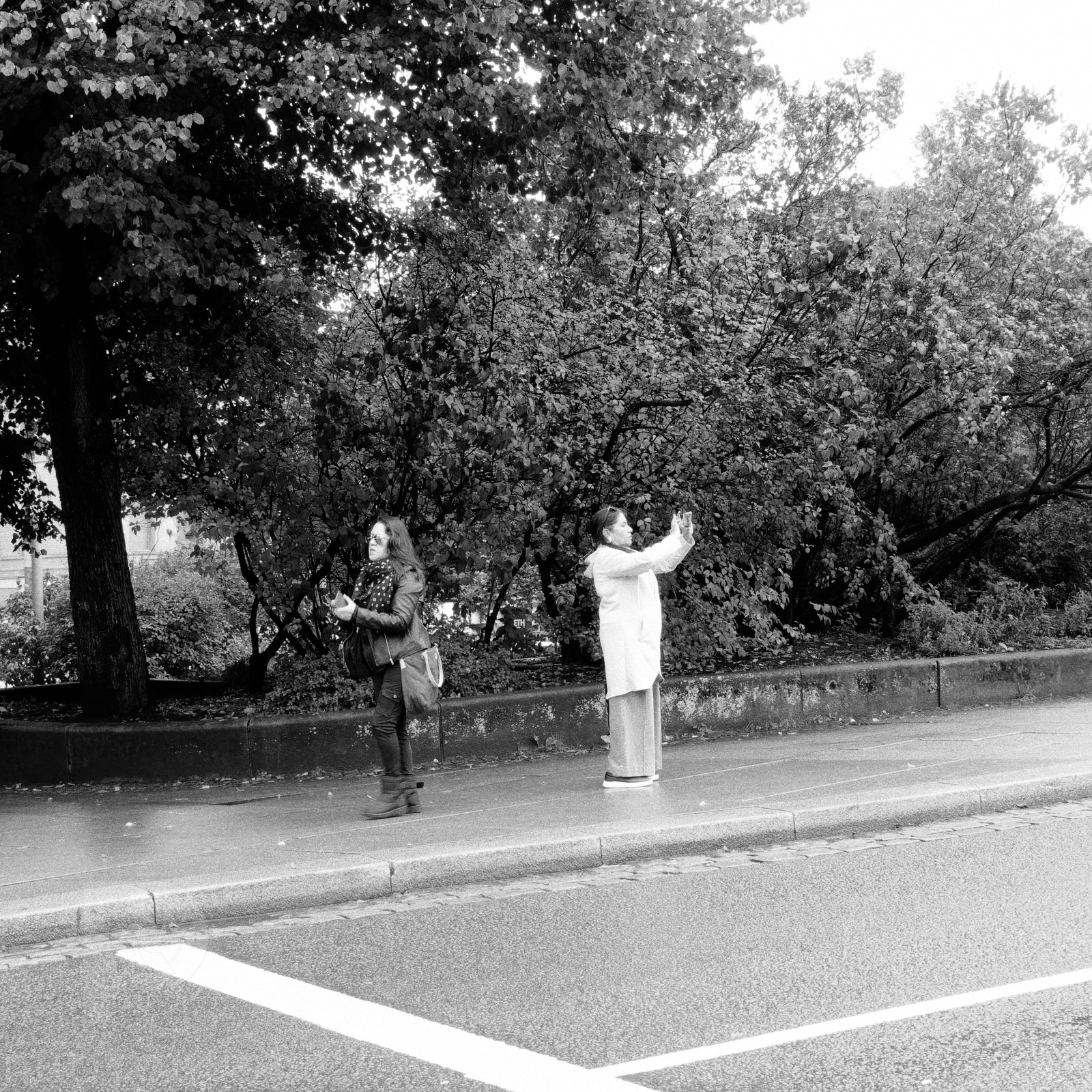
Everybody wants to slow down. Everybody wants to shoot analogue. Everybody wants to reject AI. The language is nearly identical across hundreds of posts. But it reads like groupthink, with few people providing specific, personal arguments for why these changes matter to their actual practice.
Maybe it’s just me and my allergy to following groups and rules. The declarations feel reactive, defensive, tribal. They’re not strategies. They feel like nothing more than loyalty oaths. They’re borrowed positions adopted because the community values them. People aren’t saying “I’m shooting film because my work requires specific qualities that digital doesn’t provide.” They’re saying “I’m shooting film because film is real and authentic.” The first is an argument connected to practice. The second is a slogan that could apply to anyone.
However, positions adopted for social reasons rather than practical ones don’t hold with the passage of time and when conditions change. As soon as the social pressure shifts or the practical costs become clear, people quietly abandon them without announcement.
The slowness rhetoric demonstrates this perfectly. Slowing down makes sense if you’re doing contemplative landscape work or formal studio portraiture where time and deliberation improve results. It makes considerably less sense if you’re shooting street photography or documentary work where speed and responsiveness are essential. But everyone’s declaring they want to slow down regardless of whether it suits what they actually photograph. That suggests the appeal isn’t practical. It’s symbolic.
Slowness represents resistance to ambient acceleration. In a moment when photography is changing faster than anyone can process, declaring you’ll slow down feels like taking control. It feels like refusing to participate in whatever’s making everything worse. But it’s not actually a strategy. It’s a gesture.
Film has become similarly symbolic. Shooting film does force certain disciplines. It limits how many frames you make. It separates capture from review. It creates specific aesthetic qualities through grain structure and colour response. For some photographers, those constraints and qualities are genuinely essential to their work. For most people making these declarations, they’re not. Film is being adopted because it represents something: authenticity, craft, resistance to digital convenience. The material choice becomes ideological rather than practical.
I’m not dismissing film photography. I’ve starting doing it out of curiosity and I find kinda fun. But I still mostly shoot digital. I’m questioning whether people declaring they’ll shoot film in 2026 have actually thought through what that commitment entails. Film is expensive. Processing takes time or requires equipment and chemicals. Scanning requires either money or skill. The workflow is slower and less forgiving. These aren’t trivial obstacles. They’re practical realities that will outlast the social approval you get for announcing your intention.
The AI rejection follows the same pattern. Declaring you’ll avoid AI entirely sounds principled and noble, but it’s increasingly impractical. AI tools are being embedded into software you already use. Image search relies on AI. Common photo organisation applications (e.g. Google photos) use AI for face and object recognition. Avoiding it completely would require abandoning tools you depend on. Most people won’t do that. They’ll just stop talking about it.
What bothers me isn’t the uniformity itself. Communities form around shared values. That’s normal. What bothers me is the performative quality of these declarations and the apparent lack of critical examination underneath them. Photography is facing genuine challenges. AI is genuinely disruptive. The response should be strategic thinking about what photography can do that AI cannot, how to position your work accordingly, and the more general context. Instead we’re getting tribal declarations that mistake aesthetic choices for solutions.
Saying you’ll shoot film doesn’t address what AI is doing to the market for commercial photography. Saying you’ll slow down doesn’t change the fact that image generation is being democratised and devalued simultaneously. These declarations make people feel better and help them find community with others making similar statements. But they don’t solve the underlying problems they’re supposedly responding to.
There’s also the question of follow-through. My suspicion is that most of these 2026 declarations won’t survive the year. People will discover that shooting film exclusively is limiting in ways they didn’t anticipate. They’ll find that slowing down means missing images they care about. They’ll realise that avoiding AI entirely requires giving up tools they rely on. The declarations will get quietly abandoned without acknowledgment.
This happens because the declarations weren’t personal to begin with. They were social performances. When you adopt a position because your community values it rather than because it serves your actual needs, you abandon it as soon as the practical costs become clear or the social pressure diminishes.
New Year intentions stick when they’re sincere and personally felt. When they emerge from honest examination of what’s working and what isn’t in your practice. When they’re connected to specific goals that matter to you rather than general values that sound good. A photographer who’s genuinely annoyed by the speed and convenience of digital might stick with film because it solves a real problem they’re experiencing. A photographer who declares they’re shooting film because authenticity matters probably won’t, because “authenticity” isn’t a practical concern that shows up when you’re actually making photographs.
The same applies to slowing down. If you’ve noticed that rushing produces worse work, then deliberately slowing your process might improve results. That’s a personal observation connected to outcomes you care about. But if you’re declaring you’ll slow down because speed feels wrong in some vague cultural sense, you won’t stick with it. The first time slowness costs you an image you wanted, you’ll abandon the commitment.
I’m not arguing against film or slowness or being thoughtful about AI. I’m arguing for personal reasoning rather than borrowed positions. If you’re making changes to your practice in 2026, those changes should emerge from actual problems you’re facing and actual goals you’re pursuing. They should be specific to your work, not general statements about what photography should be.
The uniformity I’m seeing suggests most people haven’t done that thinking. They’ve noticed what the community values and declared alignment with it. That might feel good in January. It probably won’t survive contact with the practical realities of making photographs throughout the year.
Photography’s challenges are real. AI is changing what images mean and what photographers can charge for making them. The market is shifting in ways that disadvantage certain kinds of work. The response to this shouldn’t be tribal declarations of allegiance to film and slowness. It should be hard thinking about what photography offers that AI doesn’t, and how to make work that depends on those irreplaceable qualities.
That thinking is harder than declaring you’ll shoot film. It requires examining your actual practice, understanding what you do well, and figuring out how to position that work in a changing landscape. It might not produce neat declarations that fit in social media posts. But it might actually help you navigate what’s coming.
So by all means, shoot film if it serves your work. Slow down if speed is degrading your results. Be thoughtful about AI’s role in your process. But do those things because they solve real problems you’re experiencing, not because everyone else is saying they will too. Borrowed positions don’t stick. Personal ones sometimes do.
2026 might be the year of uniformity in declared intentions. Whether it’s the year anyone actually does what they’re claiming remains to be seen. My bet is that most won’t, and by February the declarations will have been quietly shelved in favour of whatever actually works.
#Photography #IMayBeWrong #Theory #Opinion