
Photography sells itself as preservation. We take pictures to capture moments, to remember what happened, to hold onto people and places before they disappear. The promise is that the image will keep the past accessible, faithful, ready to consult whenever memory fails us.
That’s not what actually occurs. What happens instead is more complicated and more interesting. Photographs don’t preserve experience. They create scaffolding for reconstruction, and nostalgia is the primary material we use to build with.
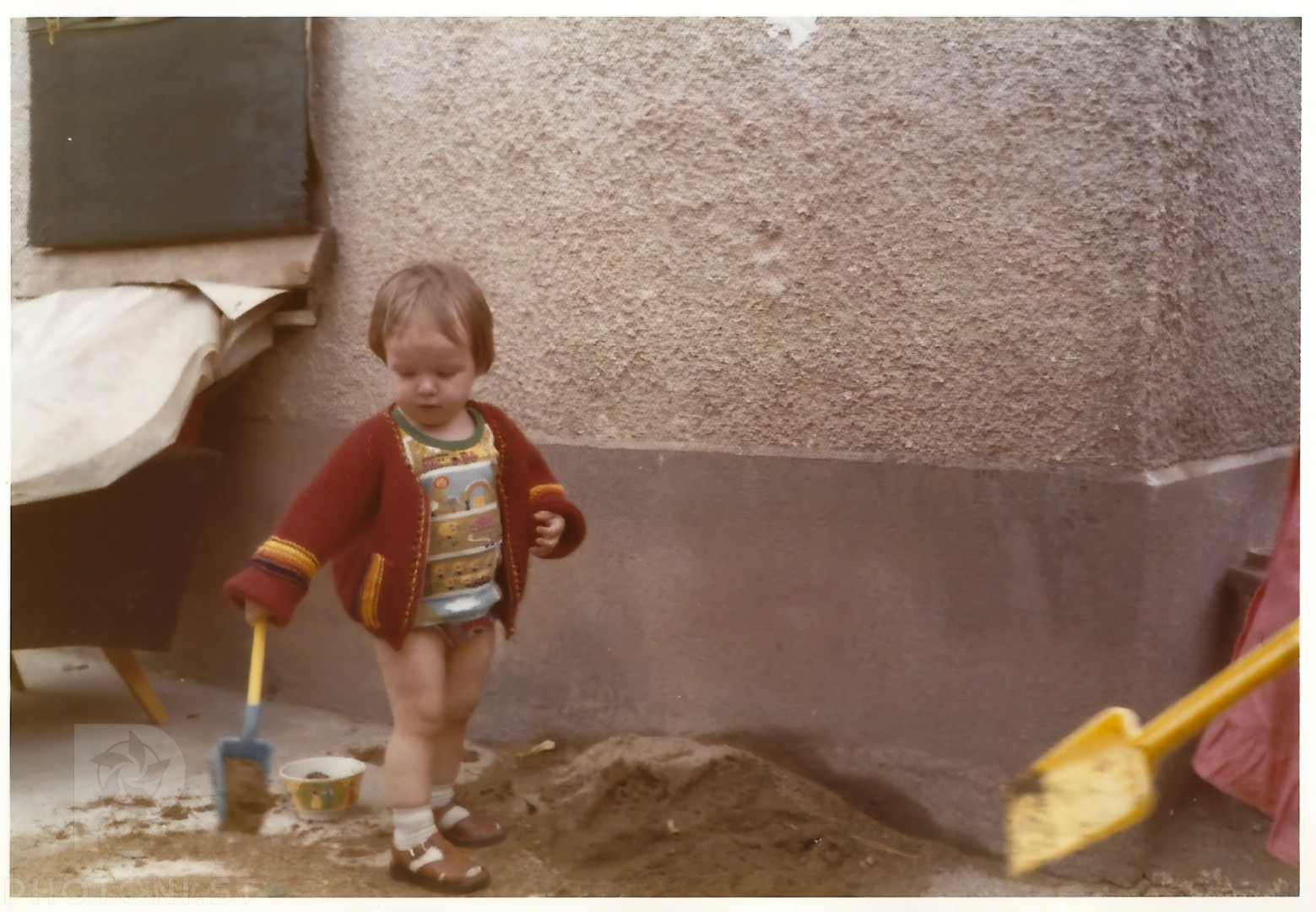
Think of how you actually interact with old photographs. You find an image from years ago and look at it, expecting to reconnect with that moment. But you’re not accessing a faithful record. You’re constructing something new. The photograph shows you shapes, faces, light, composition. Everything else comes from you: the feeling of the day, the temperature, what was said, why it mattered. Your present self supplies those details, and it doesn’t supply them neutrally. It uses nostalgia as a filter, reshaping the past to meet current emotional needs.
I look at photographs of myself as a child and immediately recall those 70s summers. They were always hot, always sunny, saturated with orange light, completely carefree. That’s the memory the images trigger. But those summers weren’t like that. The photograph doesn’t correct my revision. It accommodates it. The image provides just enough structure for me to project a feeling onto it, and that feeling becomes what I think I’m seeing.
This happens because photographs are incomplete by design. They capture a fraction of a second but not duration. They show what was in frame but not what was happening outside it. They record light but not sound, temperature, smell, or the texture of the moment. Your mind fills those gaps, and the filler it uses is nostalgia. The past gets rebuilt according to how you need it to feel now, not how it actually felt then.
Nostalgia plays two roles in this process. First, it’s what makes you return to photographs at all. Without that emotional pull, images would pile up in folders and drawers, never looked at again. The nostalgic urge to revisit is the engine that keeps photographs active in your life rather than simply archived.
Second, nostalgia provides the material for reconstruction. The photograph gives you a framework, and you build a version of the past around it. That version isn’t dishonest. It’s how meaning gets made from images. The photograph alone is inert, just data. The nostalgic work you do around it transforms that data into something emotionally functional. You create a past that serves you, and the image makes that creation feel grounded rather than invented.
This is why photographs can carry weight even when your memory has faded entirely. You can look at an image from decades ago, remember nothing specific about the moment, and still feel something powerful. The photograph provides enough structure for you to project feeling onto it. That projected feeling becomes indistinguishable from memory. The image lets you have an emotional relationship with your past even when the past itself is gone.
The same mechanism explains why other people’s photographs affect you. An image from the 1970s made by a stranger can still trigger nostalgia, not because you were there, but because the photograph scaffolds a feeling you associate with that era. You’re not nostalgic for the specific moment. You’re nostalgic for an idea of the past that the image helps you access.
So what does this mean for photographers? If nostalgia is inevitable in how images get experienced later, does that change how we should shoot?
One option is to lean into it. Certain aesthetic choices amplify nostalgic reading: grain, muted colours, warm tones, slight softness. These don’t create nostalgia directly, but they’re compatible with it. They make images feel like memories rather than documents, which accelerates the reconstructive process.
The alternative is to shoot with forensic clarity, trying to pin down the moment so precisely that distortion has less room to operate. But I doubt this works. Even a technically perfect image gets filtered through the viewer’s emotional relationship to time. You can’t photograph your way out of nostalgia.
There’s also a question about authenticity. If nostalgic reconstruction changes how we relate to the original moment, is photography actually witnessing reality? The short answer is no, and it never was. Photography presents itself as evidence but functions as interpretation. Even before nostalgia enters, the photograph is already compromised. You chose where to point the camera, what to include, when to press the shutter. Those are editorial decisions shaped by what you found important at the time. The image reflects your attention, not objective reality.
Then nostalgia completes the transformation. The photograph becomes a trigger for reconstruction rather than a record of fact. You’re not witnessing the past, you’re authoring a version of it.
This doesn’t make photography useless. It makes it something other than testimony. Photographs are better understood as anchors for memory and feeling, not as faithful representations of what occurred. They hold a moment still long enough for you to project onto it. That’s valuable, but it’s not the same as bearing witness.
Photography is a technology for emotional construction disguised as a technology for preservation. The preservation aspect is real but secondary. What matters more is that photographs let you build and rebuild your relationship to time in ways that meet your present needs. Nostalgia is the feeling that makes that rebuilding worthwhile. The photograph is the tool that makes it possible.
#Photography #Opinion #IMayBeWrong #theory #PhotographyTheory