I have cameras I haven’t touched in months. In fact I have cameras I’ve never used. They sit on a shelf, visible every time I walk past. Some moralists would tell me to sell them. To clear the clutter, to free the mind. Be honest about your actual practice. Stop kidding yourself.
They’re plain wrong because they’re looking at it from the wrong angle.
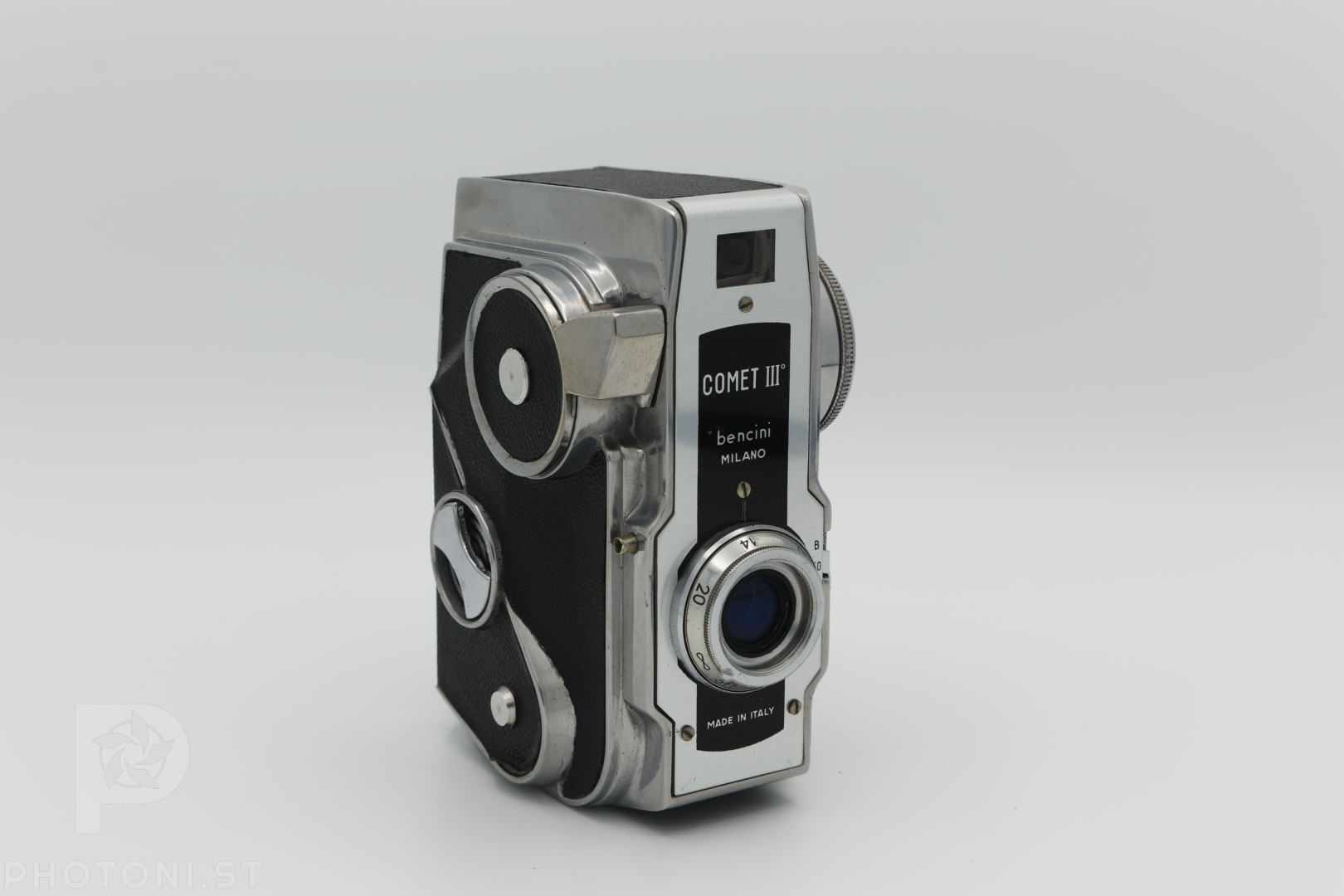
The photos you take show what you do. The equipment you don’t use shows what you want. Those are different things, and the gap between them matters more than most people admit.
I bought those cameras because I got interested in the evolution of photography and the evolution of cameras. I hadn’t used a film camera before beyond a simplt P&S, and it was all magic and alchemy to me. So I wanted to experience what it was like to take photos in the 50s, 60s , or 70s. I wanted to know how you took photos without light meter, autofocus, or film advance.
Months later, I’m still the kind of photographer who grabs a DSLR first because that’s more natural. I like the freedom and simplicity of the process (as opposed to simplicity of the tool). But I don’t regret buying them, and I’m not selling them either.
Those cameras represent a version of my practice I still believe in, even if I’m not living it yet. It’s aspirational equipment. The photography equivalent of those books on your shelf you bought because you want to be the person who’s read them. You might never actually read “Gravity’s Rainbow” or learn enough Japanese to tackle Murakami in the original, but having them there reminds you that you value complexity, that you’re interested in challenge, that some part of you refuses to settle for the path of least resistance.
Unused equipment functions the same way. It’s a physical reminder of photographic possibilities you haven’t foreclosed. The large format view camera gathering dust in someone’s cupboard says they still believe in slow, technical precision even if their current life doesn’t allow for it. The flash kit they’ve never mastered says they want to control light rather than just accept it. The film bodies taking up drawer space say they value texture and process over immediacy.
Critics of this approach treat photography like some ruthlessly efficient operation where every tool must earn its place through constant use. That’s a hobbyist’s mentality masquerading as professionalism. Real creative practice is messier. You need room for the work you’re not doing yet, the skills you haven’t developed, the projects you’re still incubating. Clearing everything that isn’t immediately useful turns photography into pure pragmatism. It optimises for now at the expense of later.
I know photographers who keep entire systems they barely touch (I’m one of them). A subscriber on Substack has a complete darkroom setup in a cupboard. A colleague owns four different camera formats and rotates through them unpredictably, leaving three idle at any given time. Both of them could “streamline” and neither will, because the unused equipment isn’t dead weight. It’s potential energy.
The difference between hoarding and aspiration is awareness. If you’ve forgotten what you own or why you wanted it, that’s a problem. If the equipment represents some version of yourself you’ve actively rejected rather than deferred, sell it and move on. But if you look at that unused camera and still feel the pull of what it represents, the kinds of images it would let you make, the discipline it would impose or the freedom it would enable, then keep it. Let it sit there reminding you that your practice isn’t finished, that you’re still becoming something.
I think about this whenever someone asks why I keep gear I’m not using. The question assumes photography is static, that who you are as a photographer now is who you’ll remain. But every serious photographer I know is moving, even when they’re not actively shooting. They’re watching other work, thinking about projects, letting ideas accumulate. The equipment that doesn’t fit their current practice might be exactly what their next phase requires.
My medium format cameras are waiting for me to have time, or patience, or a project that demands them. Maybe that happens next month, maybe next year, maybe never. I use them once in a while and I like them in a strange, twisted way. But their presence on that shelf does something my actual photos can’t: it holds space for the photographer I might become. It says there’s a version of my practice that’s slower, more deliberate, more committed to craft than convenience. Whether I ever fully inhabit that version is almost beside the point. The aspiration itself has value.
Your unused equipment is a map of unrealised ambitions. The large prints you want to make but haven’t. The street work that needs a smaller, quieter camera than you currently carry. The studio portraits that require lighting knowledge you don’t have yet. The photobooks you want to publish. The exhibitions you want to mount. All of that sits dormant in the gear you own but don’t use, waiting for you to catch up to your own intentions.
Clearing it out might make you feel temporarily efficient, but it also closes doors. And in a practice as exploratory as photography, keeping doors open matters more than maintaining some false sense of minimalist purity. Let the moralists optimise themselves into narrow corners. I’ll keep the cameras I’m not using yet, and the possibilities they represent, right where I can see them.
#Photography #IMayBeWrong #Theory #PhotographyTheory #Personal