Some of us maintain that gear doesn’t matter. And technically, we’re right: a camera won’t make you a better photographer. But there is another side to the debate.
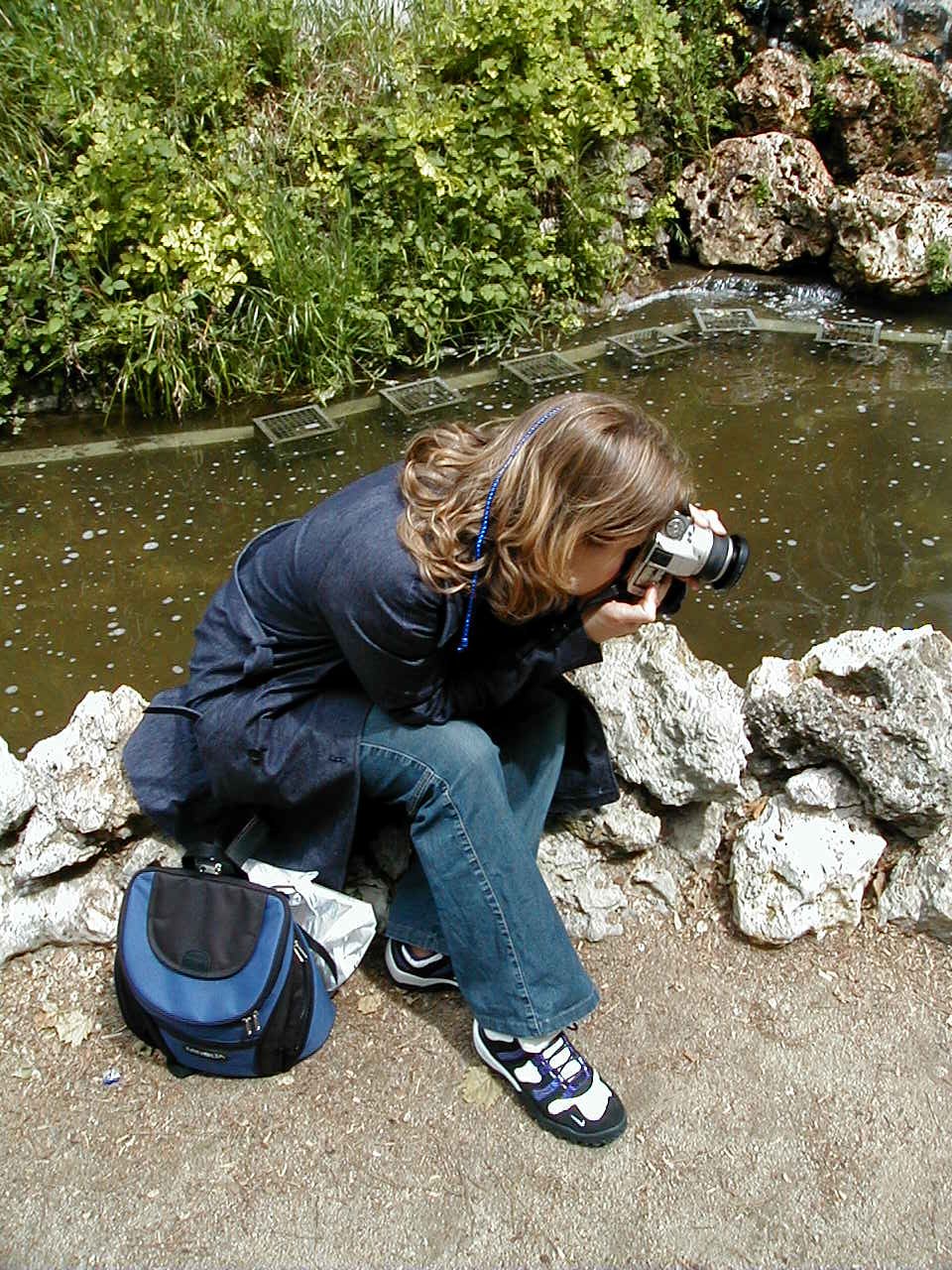
When I was younger, a girlfriend of mine processed black and white film in her parents’ bathroom. She wasn’t obsessed with photography. She’d take her camera out occasionally, and I rarely saw the results. But I was fascinated, not by the darkroom alchemy or the resulting images, but by the camera itself. A basic SLR, heavy and metal and substantial. I don’t remember the make or model. I don’t have a photo of it. But I remember how it felt like something that demanded respect, something I had no idea how to operate, and how impressive it seemed that she could.
Years before that, my uncle brought back a Canon from Andorra (tax free baby!). Probably an AE-1 with a standard 50mm lens. I spent ages playing with the split manual focusing screen, watching the world snap into alignment. It was brilliant for the 12 year old me. And yet, strangely, none of this made me want to take photographs. I was too intimidated by the machines themselves.
I understand this now because I watch my ten-year-old niece do the same thing. I gave her a Canon 550D I wasn’t using. She loves photography. She used to carry a point-and-shoot everywhere until she lost it. But the 550D sits untouched. It’s too much camera. She’s intimidated by what it represents, by the seriousness of it, by the gap between her and the thing.
In the early 2000s, I visited that ex-girlfriend in Spain. She was still shooting film, this time with a Minolta Dynax 400si or 500si, judging by my memory now. Nothing fancy. All plastic. But I was still impressed. This was before Canon launched the 300D, when digital cameras worth having were rare and expensive. I was using an early Sanyo digital point-and-shoot that I loved and carried everywhere. Cameras were still just holiday recording devices for me. But I was drawn to hers anyway.
What attracted me wasn’t the possibility of better photographs. It was the camera as object. These things are beautifully made, especially the aluminium-bodied cameras from the sixties and seventies (personal taste). They’re tools for expressing feelings and making art, yes, but they’re also just lovely to look at and hold. They don’t make the photos. They don’t make you better. But they can make the process more enjoyable by being well-designed, by matching your needs, by responding adequately when you ask something of them.
I now collect film cameras even though I rarely use film. These aren’t everyday tools. They’re a collection to look at and occasionally handle. I’ve also accumulated most of the Canon DSLR range over the years. Not because I need them all. Not because each one makes me marginally better at seeing light or composing a frame. But because they’re interesting objects in their own right.
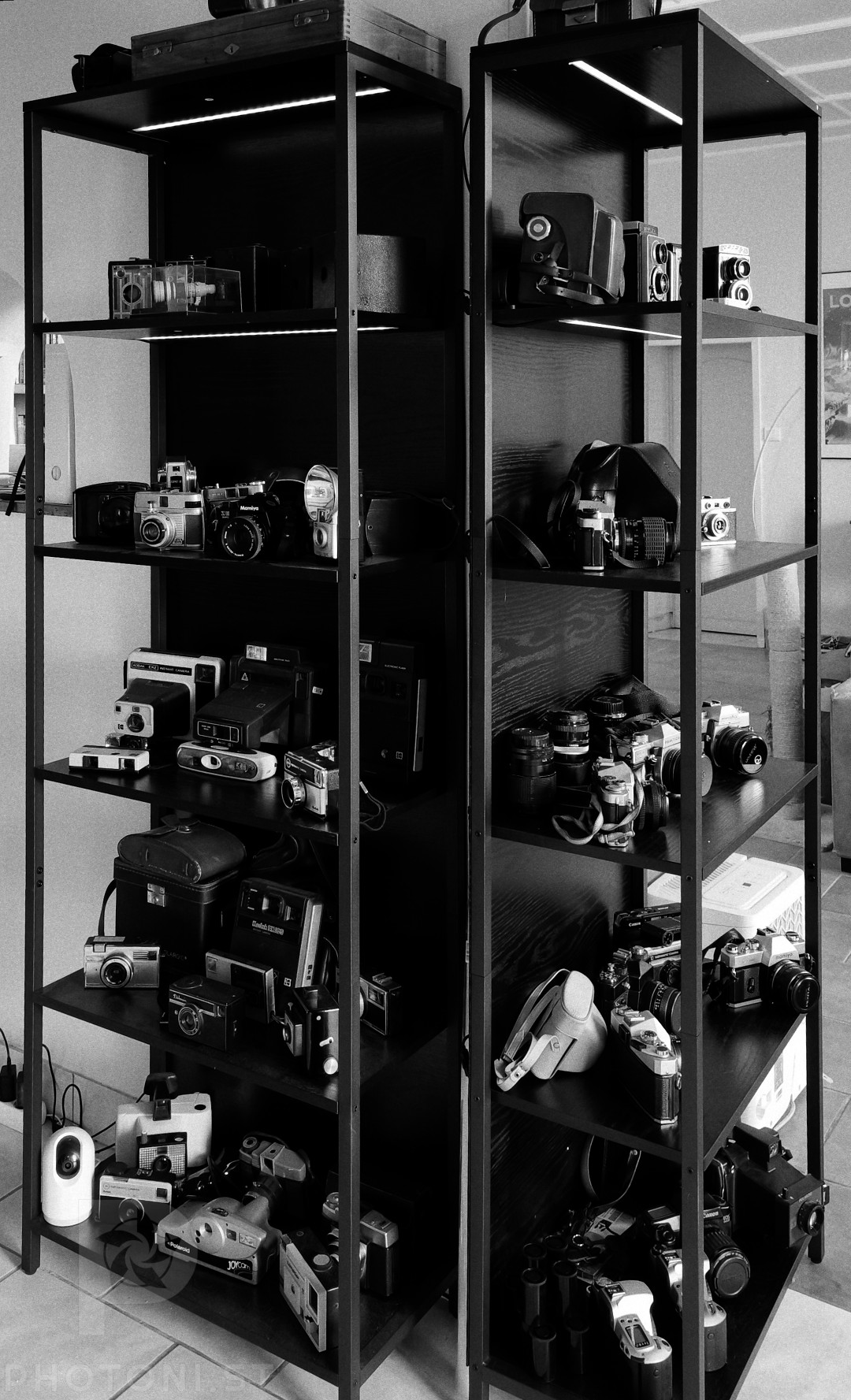
We’re dishonest when we say gear doesn’t matter. What we mean is that gear won’t fix bad seeing, won’t teach you composition, won’t give you something to say. That’s true. But it’s also not the entire story. Cameras are mechanical objects that embody particular approaches to image-making. They represent specific moments in technological development. They have weight and texture and character. Some are beautiful. Some are ingenious. Some are terrible (Holga 120N anyone?). All of them are interesting if you care to look.
There is no need to be embarrassed by your love of the tools. Tools matter in every other craft. A woodworker can appreciate a well-made plane without needing to justify it through the furniture they produce. A chef can be interested in knife metallurgy without it appearing on the plate. Why do we pretend photography is different?
Cameras are interesting. They’re interesting as design objects, as examples of engineering, as historical artefacts, as expressions of how we’ve thought about capturing images over time. They’re interesting even when they’re not in your hands making photographs. Possibly especially then, because you can appreciate them without the anxiety of whether you’re using them properly, whether you’re getting your money’s worth, whether this one will finally be the thing that unlocks your vision.
I look at my collection and I’m not thinking about whether any of them will improve my work. I know they won’t. But I like looking at them. I like how they feel. I like what they represent. And that’s enough. It doesn’t need to make me a better photographer to be worthwhile. Sometimes an interest is just an interest that doesn’t have to translate into action.
#Photography #IMayBeWrong #Opinion
[…] Camera Fascination […]
[…] niece is twelve. She loves taking photos with whatever’s in her pocket, but the 550D I gave her sits mostly untouched in a drawer. Too much camera. Too serious. Too intimidating. That fact made me think carefully about how in my […]