
Like me, you’ve probably carried both phones and proper cameras through countless streets, events, and gatherings, and the difference in people’s reactions is stark enough to make you question everything we think we know about privacy and consent in photography.
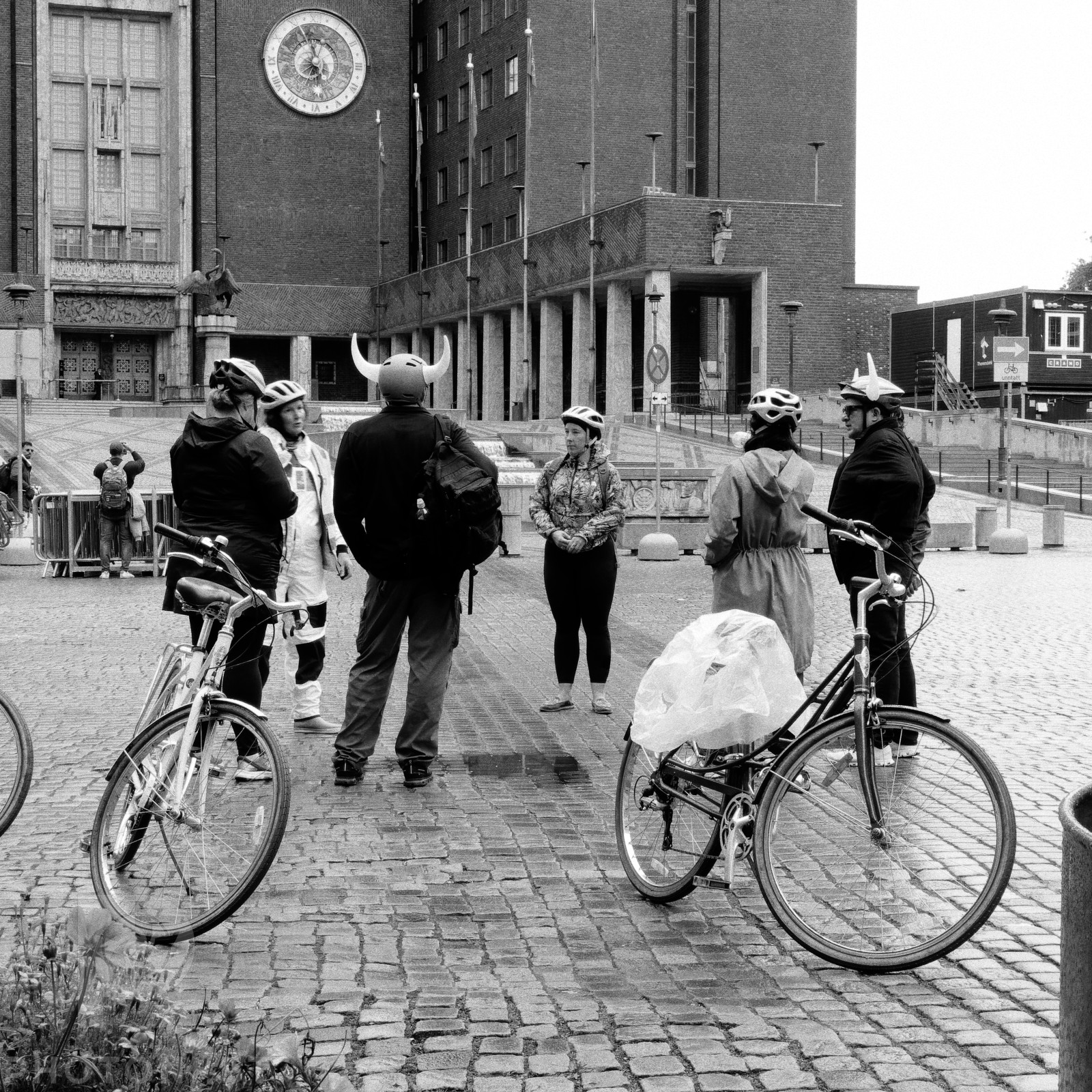
Hold up an iPhone to capture a sunset, a street scene, or even strangers at a café, and you’re invisible. Nobody flinches. Nobody asks questions. You’re just another person documenting their life in the socially acceptable way we’ve apparently all agreed upon. But pull out a DSLR or mirrorless camera with a good lens, and suddenly you’re transformed from casual observer into potential threat.
I have been asked to stop taking tight framed photos of my wife in a Starbucks when a bunch of girls at the table next to us were taking truckloads of selfies with the shop in the background. When I asked why I was told that the company doesn’t allow photography on its premises. But apparently if you use a phone it’s not photography.
I’ve been taking photos at a small village randonnee, just so that people can have something to remember it and have it in the village monthly newsletter, just to have someone shout at me that they didn’t want their face in any of my photos and they’d sue me if I used them for anything. The guy next to me was filming with his phone!
The psychology here is as fascinating as it is absurd. Both devices capture identical images. Both can zoom, both can be used for surveillance, both can invade privacy. Yet one triggers our collective paranoia whilst the other gets a free pass. We’ve created an arbitrary hierarchy of photographic legitimacy based entirely on form factor and social conditioning.
This isn’t just about the size difference, though that plays a role. It’s about perceived intent. A phone suggests casual documentation, personal memories, social media fodder. A camera suggests purpose, professionalism, potential commercial use. People assume you’re “doing something” with those images beyond just having them. They’re not entirely wrong, but they’re not entirely right either.
The practical implications for photographers are bad. Street photography, once the domain of masters like Cartier-Bresson and Vivian Maier, becomes exponentially harder when your subjects scatter the moment they spot your gear. Event photography turns into a constant negotiation rather than observation. Documentary work requires explaining yourself to every person who notices your camera, breaking the very naturalness you’re trying to capture.
It’s absolutely frustrating. When I was a kid, you’d take any photo you felt like taking with your camera. People would pose and smile. Social media, even though it has democratised photos of everything all the time, has created a framework that excludes everything that isn’t part of it because the young public has been conditioned to what is acceptable that way.
In response, photographers resort to increasingly smaller cameras, vintage models that look less threatening, or shooting from hip level to avoid detection. I do it too: I don’t take the 6D with grip or the 1DX out of the house. The 5DII with pancake lens or the RX100III are much less noticed. But we’re essentially sneaking around with professional equipment designed to capture the world, whilst amateurs with phones document everything openly. The tools designed for better photography create worse conditions for photography.
What’s ironic is that phone cameras now rival professional equipment in many scenarios in daylight. Computational photography has made the technical gap narrower than ever, yet the social gap remains vast. A phone with a decent camera app can produce images that would have required thousands of euros of equipment just a decade ago, but it retains its social invisibility.
This suggests our discomfort isn’t really about the capability of the device but about the perceived seriousness of the photographer’s intent. We’ve collectively decided that visible effort in photography equals suspicious behaviour. The more professional your approach looks, the more questions you’ll face about what you’re planning to do with the results.
Perhaps we’re witnessing a fundamental change in how photography functions socially. The democratisation of image-making through phones has made everyone comfortable with being both behind and in front of cameras, but only within specific, socially agreed parameters. Step outside those parameters with “serious” equipment, and you’re suddenly operating in a different social reality entirely.
The photographers who thrive in this environment will be those who learn to work with these social dynamics rather than against them. This might mean embracing phone photography for certain types of work, finding ways to make professional equipment less intimidating, or simply being better at the human side of photography: conversation, explanation, and building trust quickly.
The camera hasn’t just become a barrier to taking photos. It’s become a barrier to taking the kinds of photos that made photography an art form in the first place. The question isn’t whether this is good or bad, but how we adapt our craft to a world where the better your tools look, the worse your access becomes.
#Photography #IMayBeWrong #Opinion
[…] In the subway, I can’t resits taking a few photos. As I use my phone nobody cares. […]