
Photography requires something other arts don’t: you have to be there. A thing happens, a camera records it, but you (or your apparatus) must be positioned in relationship to something real. Without that presence, there is no photography.
This might seem obvious, but it’s actually an important constraint that sets everything about photographic practice.
Look at painting. A painter can work entirely from imagination or memory. He can paint a landscape he’s never seen based on description or invention. He can create figures from his mind, combine elements that never existed together, build entire worlds in their studio without encountering any of it physically. His presence during creation is required, but presence at the subject isn’t.
Writing works the same way. A novelist can describe places they’ve never been, people they’ve never met, events that never happened. The work happens entirely in their head and on the page. They need to be present during the act of writing, but not during or with whatever they’re writing about.
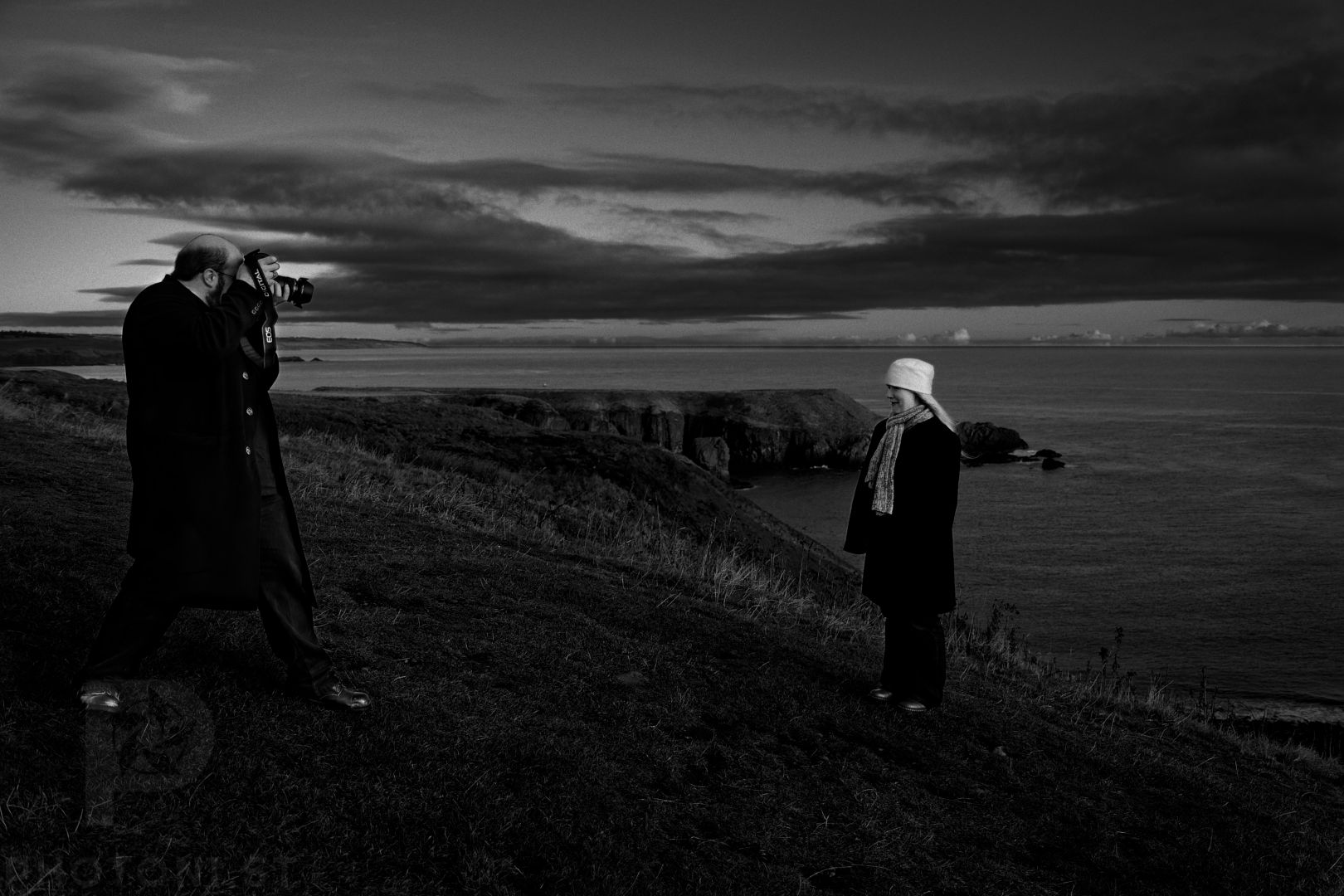
Photography changes this relationship. You or your apparatus must be present with the subject. The camera has to be positioned somewhere real, aimed at something that exists, recording light from actual objects.
You can’t photograph a mountain from memory. You can’t photograph a person you’ve never encountered. You can’t create a photograph of something purely from imagination. The camera must be there, and someone must have decided to put it there, aimed at that thing, at that time. That’s presence, even if it’s mediated through technology or delayed through automation.
The image has a causal relationship to what it shows: light from the subject hit the sensor or film. That physical connection happened. A photograph of a street means the camera was on that street. A photograph of a person means that person was in front of the lens. The image is evidence that presence occurred.
What about security cameras? Traffic cameras? Trail cameras photographing wildlife? These make images constantly without anyone being present at the moment of capture.
But I wouldn’t call most of that photography in the meaningful sense. Just because a camera records something doesn’t make it photography. Photography implies intent, framing, consideration about what’s being captured and why. CCTV is surveillance. It’s mechanical recording without aesthetic or documentary purpose beyond security monitoring. Calling it photography would make the term meaningless.
A trail camera is closer to photography because someone positioned it deliberately, chose the location and framing, intended to document what passed through that space because of a personal interest (e.g. animals in the area). But it’s at the very edge of the definition. The intent is minimal. The framing is fixed. There’s no response to the moment. It’s automated recording with slight intentionality.
What about AI image generation? That produces things that look exactly like photographs without anyone being present at any scene. No camera, no light, no physical reality being recorded.
That’s not photography. It’s something else. The output might be photographic in appearance, but the process is fundamentally different. It’s closer to commissioning an illustration than making a photograph: the person typing prompts isn’t present at anything except their keyboard; they’re not encountering reality and recording it. They’re describing what they want and letting statistical models generate it.
This is important because it clarifies what photography actually is. It’s not just about producing images that look a certain way. It’s about a specific process that requires engagement with physical reality through a camera. That engagement requires presence, either direct or mediated through apparatus you’ve positioned and programmed.
This requirement for presence shapes photography in ways that define the practice. If you’re committed to making photographs, you have to go places, encounter things, be in the world observing it. You can’t retreat entirely into your studio or imagination the way a painter or writer can.
Even studio photographers need subjects. They need to arrange physical reality, position objects or people, control light falling on actual things, then capture that arrangement. The studio might be controlled environment, but it’s still physical reality being recorded. The photographer is present, making decisions about what exists in front of the camera.
This makes photography about engagement with what exists outside your own mind. You’re constrained by reality iin ways other arts aren’t. A painter frustrated by a subject can invent a better version. A writer can change details to serve the narrative. A photographer has to work with what’s actually there or build it physically.
That constraint is both limitation and strength. It forces you outward, into encounter and observation. Your practice requires that you be present in the world, noticing it, responding to it, making decisions about how to record what you find. But you can’t capture something that doesn’t exist.
This is why photography can feel more immediate than other arts. You’re not interpreting or reconstructing from memory. You’re there when the thing happens. The photograph is evidence of that presence. It says: this existed, I was positioned to see it, I recognized it was worth recording. That chain of presence and recognition is what makes the photograph.
It’s also why photography changes how you move through the world. Once you’re practicing seriously, you’re always half-looking for photographs. You notice light differently. You watch how people move. You see compositional possibilities in ordinary scenes. Your presence becomes photographic presence, a specific mode of attention where you’re constantly evaluating whether what’s in front of you could become an image.
Other arts don’t require this. A writer can observe casually, store impressions, work with them later. A painter can sketch loosely, take reference photos, synthesize from multiple sources. But a photographer needs to be there with a camera when the moment happens, or needs to have positioned a camera to be there on their behalf.
This is the discipline. Not just technical skill or aesthetic judgment, but the commitment to presence. To being in position when things happen. To noticing when the ordinary becomes photographable. To understanding that the photograph only exists because you were there to make it exist.
This is why photography is not about gear. Despite what all the brands and influencers want you to believe. If it was, photography would be no more than CCTV: surveillance. We all know it’s much more.
Some people find this constraining. Photography can’t build worlds the way painting can. It can’t construct narratives the way fiction can. It’s bound to what actually exists and what the camera can record from where it’s positioned.
But that constraint is what makes photography distinct. It’s an art of encounter rather than invention. Of observation rather than imagination. Of being present with the world and recording what that presence shows.
You can manipulate photographs after capture. You can composite, adjust, transform the image extensively. But you can’t create a photograph without the initial presence. Without the camera being somewhere real, aimed at something actual, recording light from objects that exist. That requirement is at the core of photography.
This is why the rise of AI image generation matters. It’s not just a new tool. It’s a fundamentally different process that breaks the requirement for presence. You can generate photographic images without encountering anything, without being anywhere, without recording reality. That might be useful for various purposes, but it’s not photography in the meaningful sense because it doesn’t involve the discipline of presence.
Photography understood properly is about positioning yourself or your apparatus in the world and recording what’s there. That requires presence. It requires that you go to places, encounter subjects, make decisions about how to frame and capture what exists in front of the lens. The photograph is evidence that presence occurred and that you recognized something worth preserving.
This is what distinguishes photography from other arts and what defines its particular needs. You can paint from imagination, write from memory, compose music in your head. But you can’t photograph without presence. Without being there, or having positioned your camera to be there on your behalf, when the light hits the sensor and the image forms.
That requirement shapes everything about the practice. It determines where you go, how you see, what you notice, when you’re ready. It makes photography an art of engagement with reality rather than retreat into imagination. And it means that every photograph carries within it the evidence of presence, the trace of someone or something being positioned to witness and record.
#Photography #Opinion #IMayBeWrong #PhotographyTheory
One Reply to “Photography Requires Presence”