
I suspect every photographer has a piece of equipment that changed everything for them. Not always expected, rarely expensive. But the one that unlocked something for them.
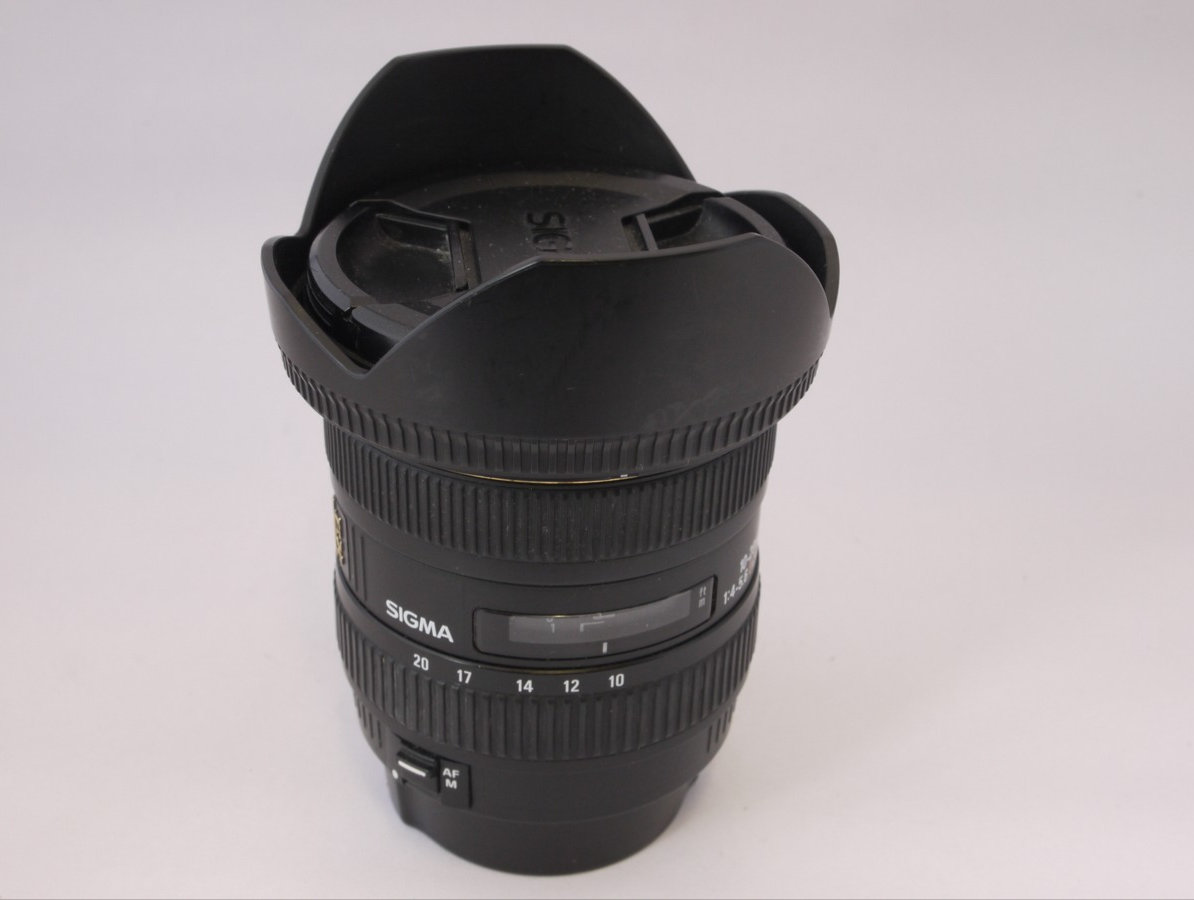
Mine was the Sigma 10-20mm. I bought two decades ago out of curiosity not really knowing what to expect of it, but I had seen on forums that a lot of landscapes photographers were using ultra-wide lenses (and I couldn’t afford the Canon 12-22mm). My go-to Tamron 28-300mm at the time had been getting in my way for landscape and seascape work; on an APS-C sensor with a 1.6x crop factor, the effective range pushed to 45-480mm, which meant constantly stepping backwards to fit the world into the frame. It just hadn’t been working for me.
You hear a lot about the human eye being equivalent to 50mm, which is probably close enough, though I saw tests showing it’s closer to 43mm, but it ignores what the brain does. Vision is not just capturing light with your eye. The eye moves constantly; the brain assembles a wider view from whatever fragments it receives; the conscious image is a stitch of multiple millisecond exposures. My brain seems to default to around 24-28mm on a full-frame. So 45mm with my Tamron was complete torture.
When I mounted the Sigma for the first time and looked through the viewfinder, the world changed. For the first time, a camera saw roughly the way I did. The world compressed to 16-32mm equivalent and it felt right. I suddenly could include everything from my feet to the horizon in a way that sustained my way of walking through an image.
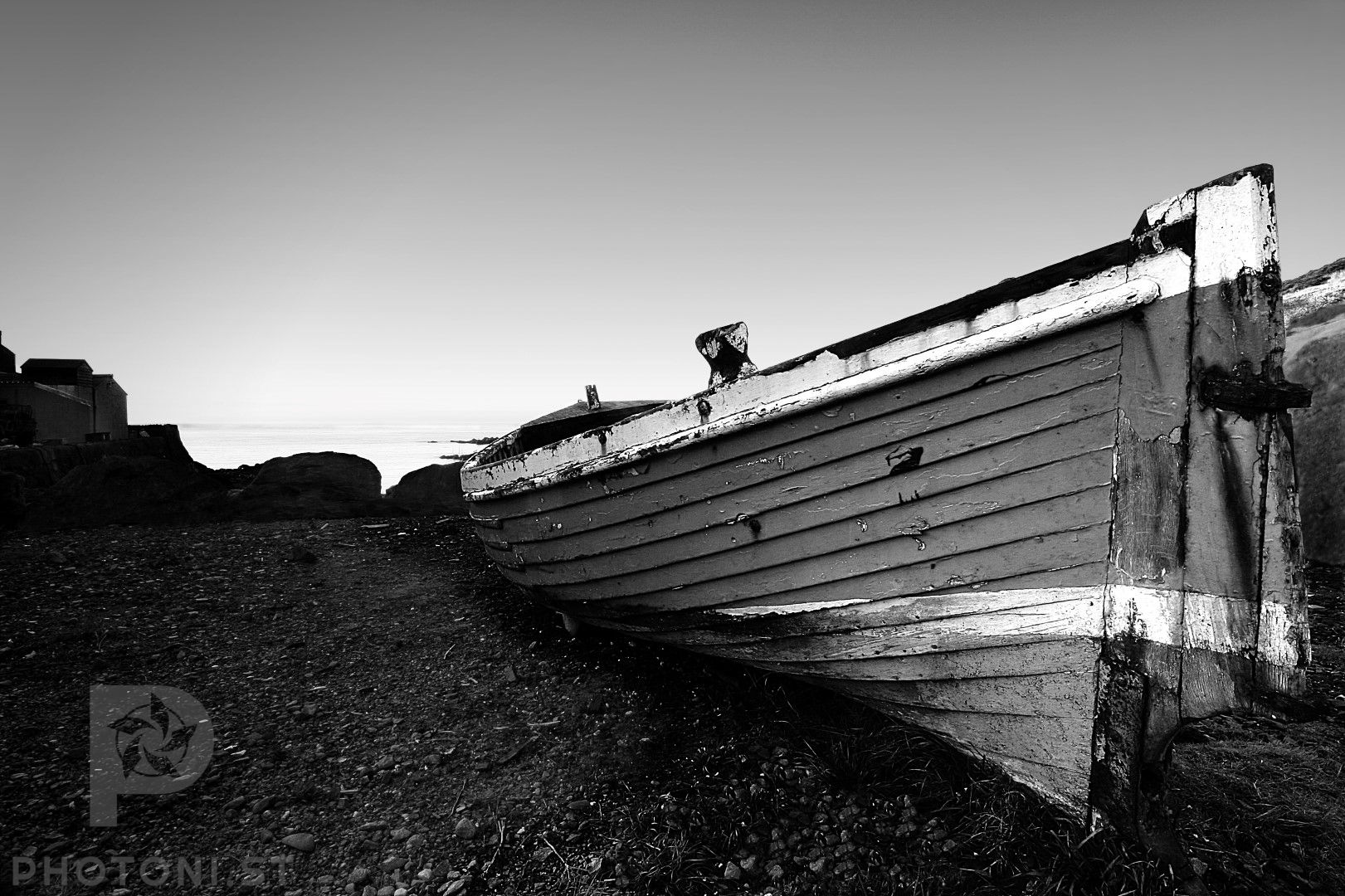
I used that lens for years as my primary landscape tool. In fact, when I moved to full-frame with the 5D in 2007, I couldn’t stand the 24-105L I bought with it because it felt like a step backward. So I continued using my old 350D+Sigma for landscapes. A couple of years ago I bought a Canon 17-40L on eBay (now dirt cheap), and I finally felt I could do landscapes in full-frame.
Ultra-wide lenses have a reputation problem, and it’s not entirely undeserved. They get misused by photographers trying to make unremarkable things look out of this world, and in the end it feels artificial. I remember when National Geographic photographers used super-wides for a while on assignment in the early 2000s. The results looked strange. You felt like you were right in the middle of the action, but the distortion was disorienting, the geometry unnatural rather than immersive, the perspective awkward. I suspect they were using the Canon 16-35L at the wide end.
When the focal length matches how a photographer actually sees and when it’s applied to circumstances where it makes sense (e.g. don’t use 16mm for a portrait), things become magical. That lens taught me more about framing, space, how to read a photo, how I think about a scene, and how to compose a shot than any tutorial. It gave me the freedom to take any photo I liked without forcing the equipment to see the world my way.
Every photographer seems to have their version of this. For every photographer it’s a different thing: a roll of Tri-X that unleashed a monochrome passion, an old battered camera that jammed every third shot and forced restraint and slowing down, medium format rather than 35mm. What counts isn’t the object, it’s what it does to the way you operate: it doesn’t make things easier; it makes them yours.
#Photography #IMayBeWrong #Opinion #PhotographyTheory