
When I started taking photography seriously, I was taking single photos. At most, I’d go back to the same place over and over again (e.g. Aberdeen beach) but each visit would be separate from the previous ones. It worked for me because I was interested in making pretty pictures, and they don’t need to tell a story.
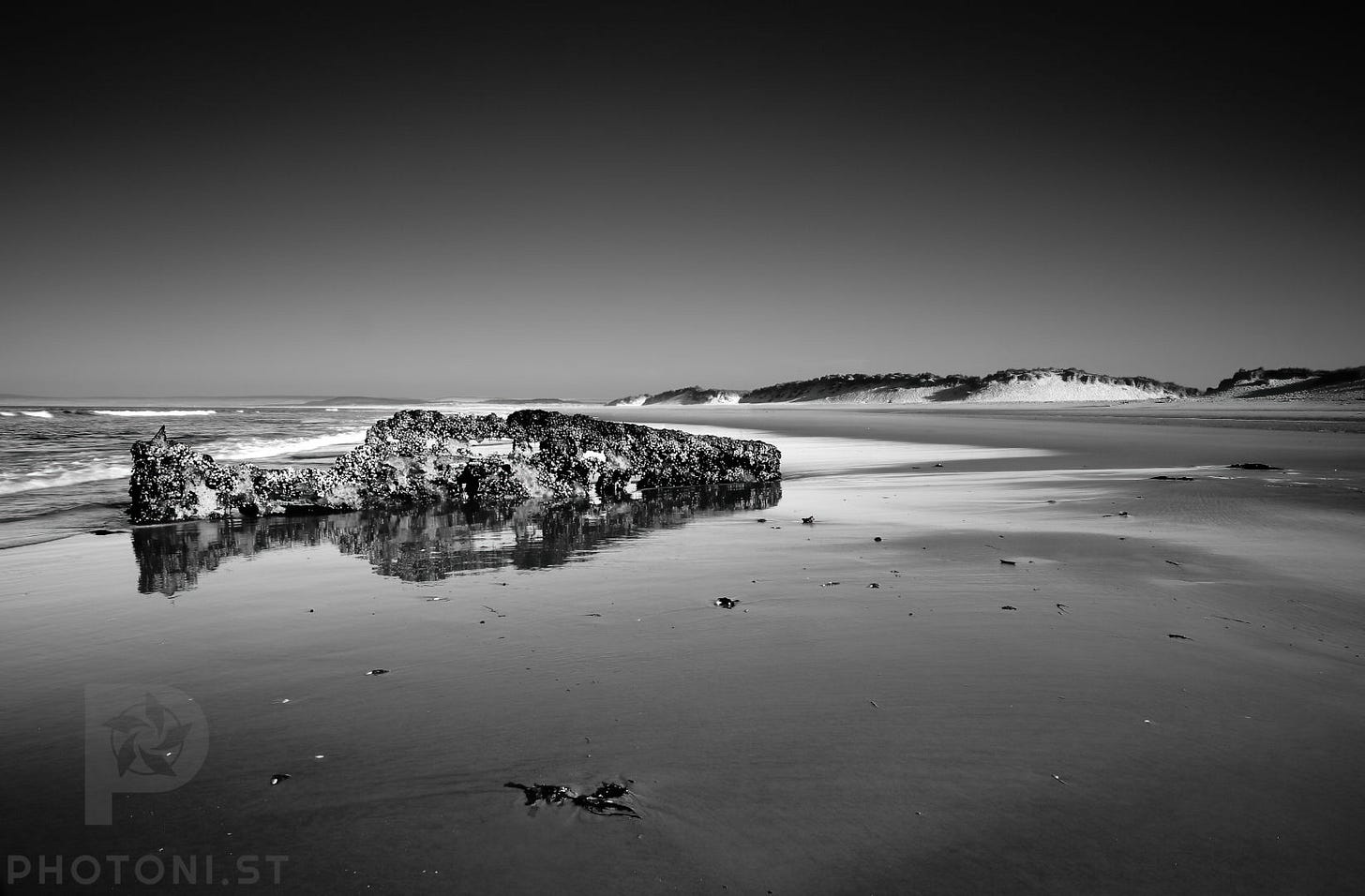
After a while, it started to feel like they were falling short of something. A sandy beach by itself is nothing. Add a wreck, then a man with a dog, and it starts to say something. A sequence starts to build up and it acquires meaning that no single image can. Which made me wonder, eventually, where the idea came from. Who decided that a story could be told in photographs, in a deliberate order, with an edit?
Eventually, I developed an interest in photo essays and storytelling.
When you think photo essay, you think Life Magazine. If you’re French, you think Paris Match. You think WWII reportage. You think Viet-Nam reporting. Or even Gulf War embedded journalists. But the photo essay wasn’t invented by Life. It was invented in Berlin in the 1920s, at the Berliner Illustrirte Zeitung, a weekly owned by Ullstein Verlag that reached a circulation of over two million by the 1930s, making it the leading illustrated journal in Germany (MoMA). Under the editor Kurt Korff and the art director Kurt Szafranski, its staff “pioneered the new form of the photo essay, producing picture spreads that told stories through images alone” (Met Museum). Korff’s own justification for the format, quoted at the time, was that “life has become more hectic and the individual has become less prepared to peruse a newspaper in leisurely reflection.” People needed to absorb a story visually, at speed. He was describing the late 1920s, but he could have been describing the modern phone. Younger generations today can relate to that.
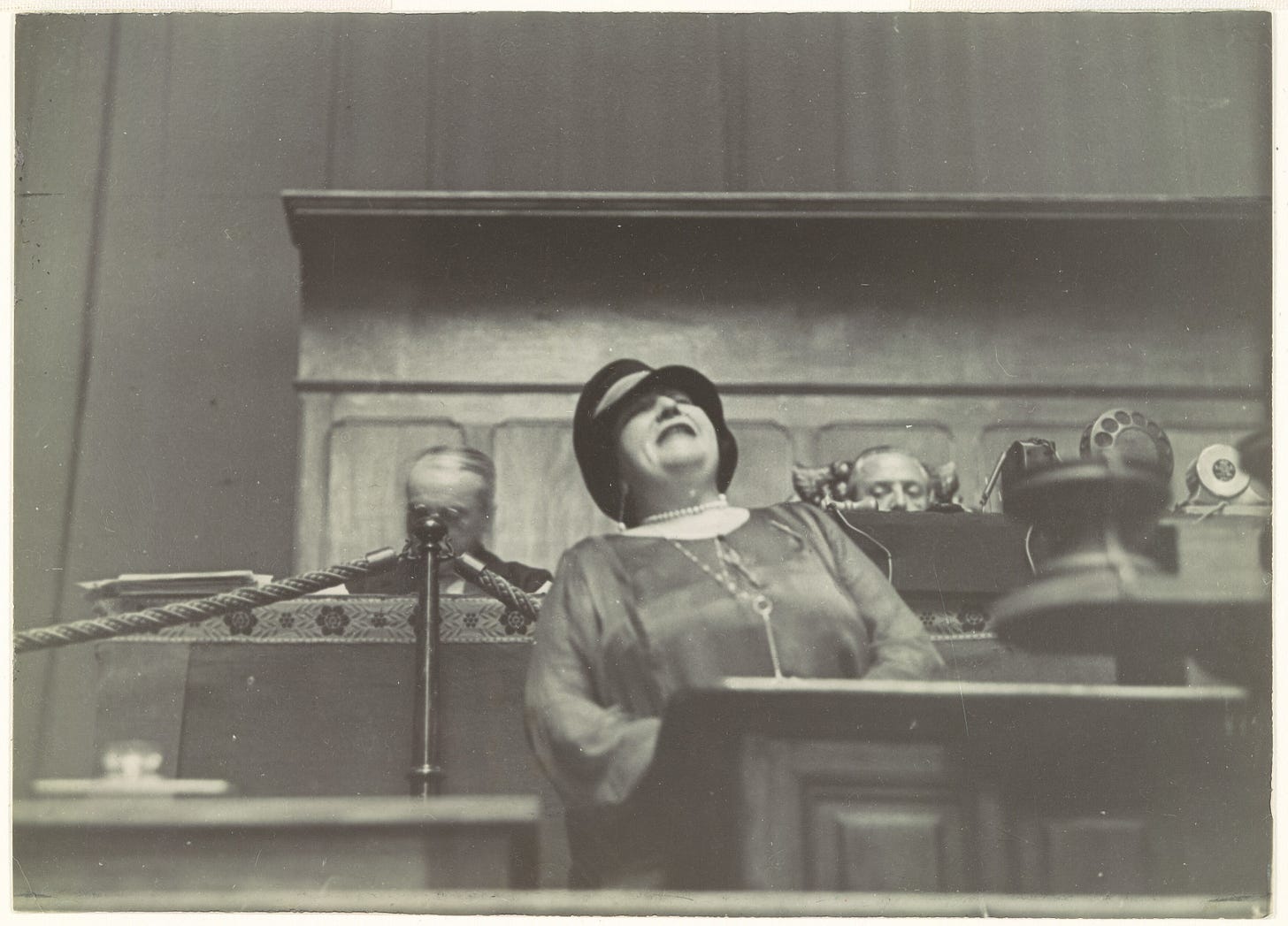
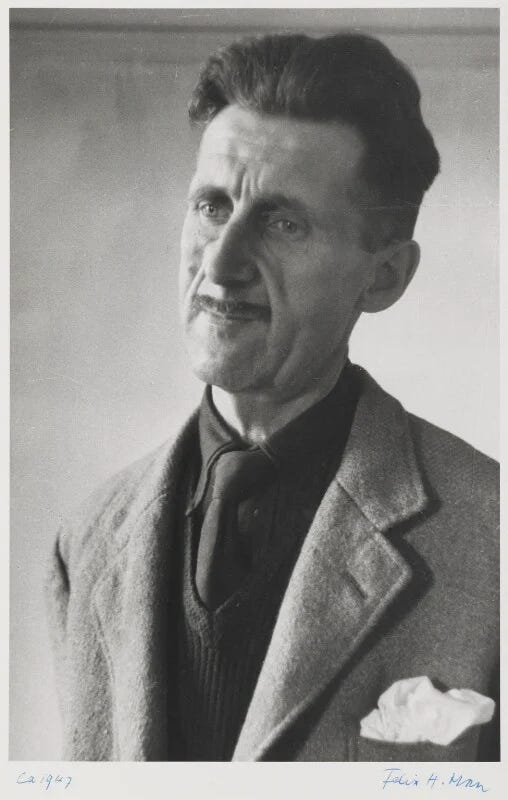
Two photographers defined the BIZ style, and they did it in opposite ways. Erich Salomon used a small handheld camera and hid it, which let him photograph political and industrial leaders on the sly. Candid photography of power was a new idea, and it took nerve. Felix H. Man photographed Benito Mussolini, Winston Churchill, And George Orwell, and from that kind of reportage grew the day-in-the-life template that every “day in the life of X” photo essay since has copied, including several I’ve half-planned.
MoMA notes that BIZ was widely acknowledged as a model for Henry Luce’s Life (MoMA). Several of the German editors who built the BIZ’s visual language emigrated to the US in the 1930s to escape Nazi persecution and worked directly on Life’s launch. Szafranski, who “made photojournalism a new genre” at the BIZ, changed his name to Safranski after emigrating and helped found the Black Star photo agency, which supplied images to the American picture press (Wikipedia). A Princeton exhibition catalogue on Life’s founding confirms that Luce’s “experimental picture department” building towards Life used mock-up “dummy” magazines created by “the German émigré Kurt Safranski and other editors with experience working on European magazines” (Princeton University Art Museum). The form crossed the Atlantic in the heads of refugees.
The technique spread across Europe too. In France, the Communist magazine Regards, founded in 1932, actually predates Life by four years and is remembered specifically for its photojournalism (Wikipedia). In Britain it found its fullest expression in Picture Post, founded by Stefan Lorant, a Hungarian editor who had himself fled Nazi Germany and is described by historians as Britain’s direct equivalent to Life or Paris Match (Cardiff University). So the form was already a European habit, before the Americans gave it a name.
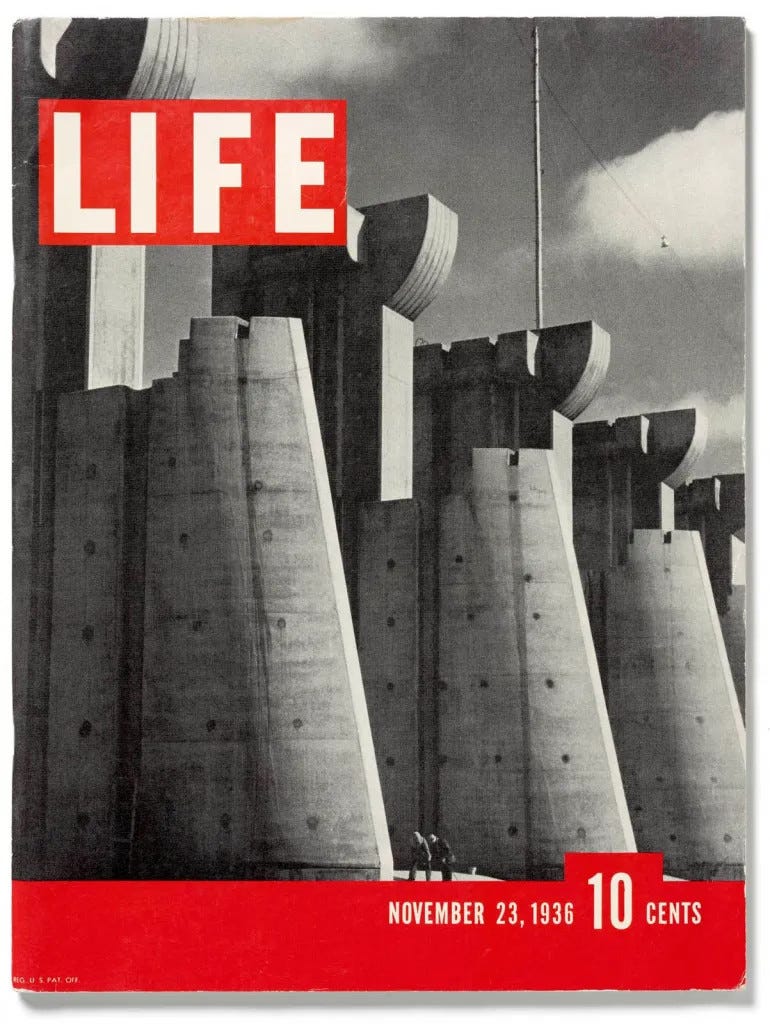
Life launched on November 23, 1936, published by Henry Luce, who also ran Time, and its first cover, Margaret Bourke-White’s photograph of the Fort Peck Dam, set the tone immediately (Columbia University Libraries). At its peak Life reached roughly one-quarter of the entire US population per issue, counting pass-along readership in waiting rooms and offices, and it had more than eight million paid subscribers by 1970 (MFA Boston); (Britannica). One in four Americans, in a single week.
The term “photo essay” itself is generally dated to Life’s launch (academia.edu, “The birth of the photo essay”).
Life, however, wasn’t just an American copy of its European ancestors. Where French and German photojournalism of the interwar years leaned liberal or explicitly anti-fascist, Life’s editorial ethos was more conservative, and the scholar Nadya Bair argues it offered readers “a mythic version of itself bound within a tight set of ideologies” rather than a campaigning or dissident visual politics (academia.edu, “Photo Essays at LIFE”). Life’s staff and contract photographers, though, was extraordinary: Margaret Bourke-White, Robert Capa, Alfred Eisenstaedt, Gordon Parks, W. Eugene Smith, Larry Burrows, Henri Cartier-Bresson (MFA Boston).
The process of creating photo essays wasn’t solo act. A 2020 exhibition co-organised by the Museum of Fine Arts Boston and Princeton University Art Museum, drawing on Life’s picture and paper archives, explained the setup at Life (MFA Boston).
It started with the assignment. A story idea came from the editorial staff, not usually from the photographer; a photographer was matched to it; and a shooting outline, or “shooting script”, was drafted before anyone left the office.
Then the shooting. This is where Life turned the production process to 11. For W. Eugene Smith’s “Country Doctor”, it meant 23 days living alongside a single rural physician in Kremmling, Colorado, in 1948 (PetaPixel), from which Smith personally narrowed roughly 200 photographs down for Life’s editors to consider. But he “did not control” the final layout (Magnum Photos). For Gordon Parks’s “Harlem Gang Leader” in the same year, Parks spent weeks gaining the trust of a real Harlem gang led by 17-year-old Leonard “Red” Jackson (Gordon Parks Foundation), shooting hundreds of negatives, of which Life’s editors selected only 21 for publication, often darkening or cropping details (KQED, Time).
Then the editing. Undeveloped film and the photographer’s notes went back to Life’s New York offices, where an industrial apparatus took over: negative editors, picture editors, art directors, layout artists, writers, researchers, and fact-checkers, all working from contact sheets (MFA Boston, press release). It’s also the step most likely to introduce editorial bias. The KQED retrospective on Parks’s unpublished negatives makes the point that the 21 images Life ran told a specific, narrower story than the fuller archive supports (KQED). Every photographer who has ever had a picture cropped by someone else understands the feeling. The crop wasn’t wrong, but it was someone else’s decision.
Then the layout. Editors sequenced the surviving images into a narrative arc across a spread, choosing which image opened the story, usually the most visually dominant, full-bleed or full-page, and which closed it, and how the text linked them: captions, a short introductory block. Internal memos, layout experiments, shooting scripts and caption files from the exhibition show this was iterative and often contested between photographer and editor (Princeton University Art Museum).
And then publication, and the afterlife. A strong essay could reshape a subject’s life. Dr Ernest Ceriani, the physician at the centre of “Country Doctor”, became a minor celebrity and was invited onto television and radio after the story ran (PetaPixel). “Harlem Gang Leader” won Parks a full-time staff position, making him the first Black staff photographer in Life’s history (Gordon Parks Foundation, Biography). Twenty-one pictures changed a man’s career, because the form had power (whether you like the was it was used or not).
Some essays stand out. As mentioned before, “Country Doctor” and “Harlem Gang Leader” were train-blazers.
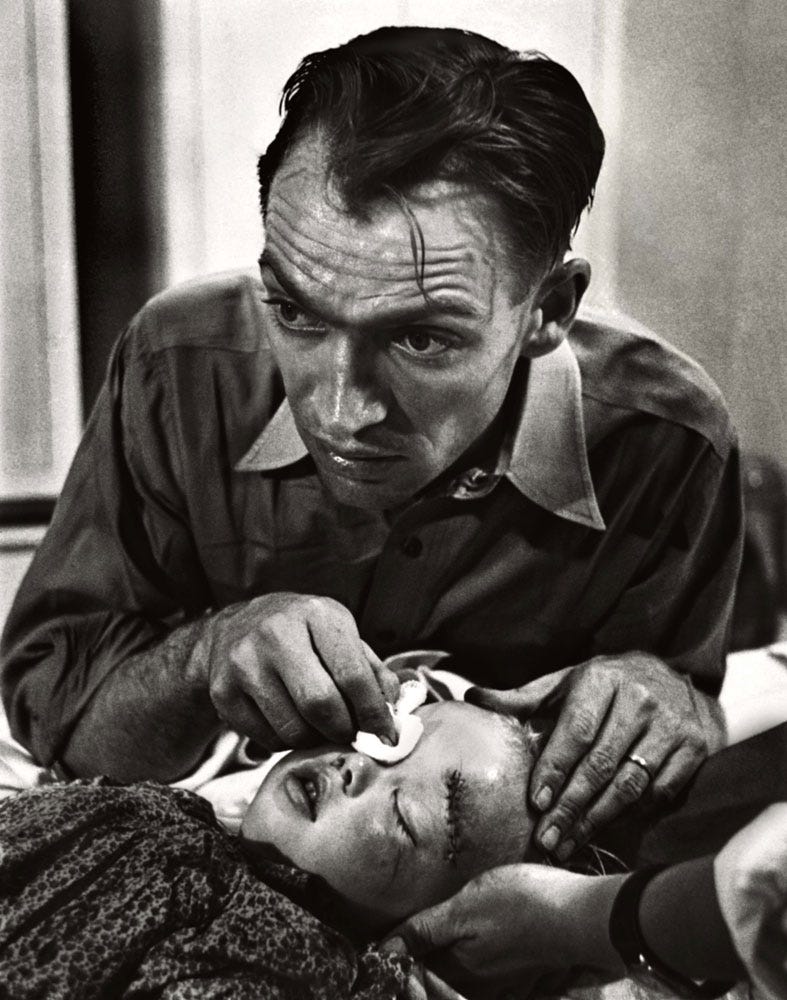
“Country Doctor” is widely considered the first extended editorial photo story and the genre’s archetype (kevinlj.com). Smith compared his working method to a playwright’s, building narrative structure rather than collecting strong single frames (Magnum Photos). He went on to build “Spanish Village”, “Nurse Midwife”, and an essay on Albert Schweitzer on the same model, and he closed his career with “Minamata” (1975), an essay on mercury poisoning in a Japanese fishing village made with his second wife, published as a book because, by then, Life itself had folded (Archives West).
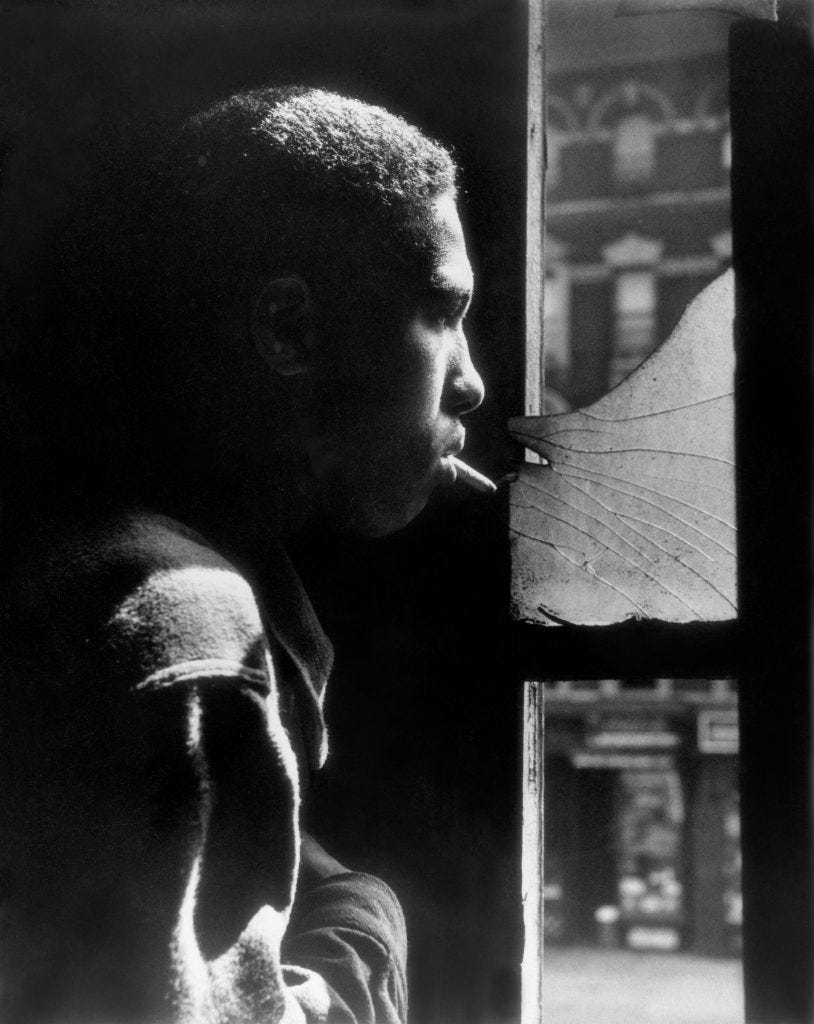
“Harlem Gang Leader” ran on November 1, 1948, and it remains a well-documented case study in editorial framing, precisely because the published essay and the fuller negative archive tell different stories (Time).
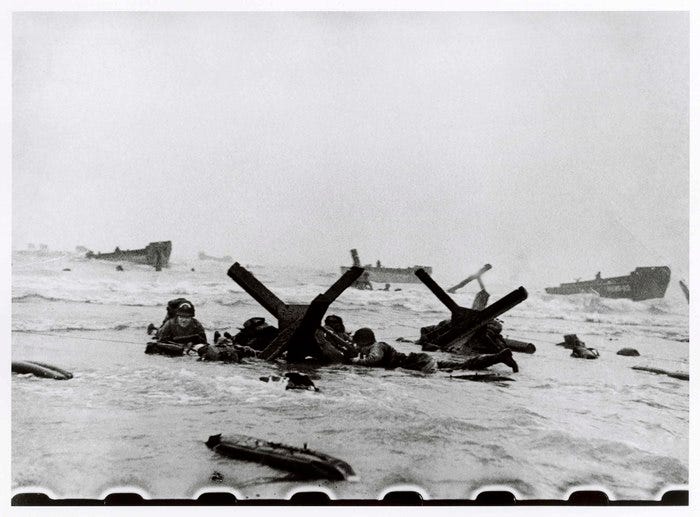
Then there’s Capa on D-Day, June 1944. He went ashore with the US troops at Omaha Beach and claims to have exposed roughly 150 frames. If you believe the legend, a darkroom accident in Life’s London office destroyed all but eleven. Life ran ten of them with a caption noting they were “slightly out of focus”, a phrase Capa later used as the title of his memoir (Smithsonian). Capa’s own account of the day, and the surrounding mythology, has since been shown by photo historians to be partly unreliable and self-mythologising (PetaPixel, “Debunking the Myths of Robert Capa on D-Day”).
There’s also Larry Burrows, a bit of an outlier who started as a Life darkroom technician in London before becoming a staff photographer. His extended Vietnam War essays, spanning 1962 to 1971, are considered among the format’s high points. He was killed in 1971 when his helicopter was shot down over Laos (Military History Wiki).
And then there was Magnum, founded in Paris in 1947 as a reaction against the control editors had over photograph selection and layout. Capa, Cartier-Bresson, David “Chim” Seymour, George Rodger, and William Vandivert founded Magnum Photos so that photographers would retain copyright and control over their own negatives (Bonjour Paris).
None of it would have been possible without the hardware, which arrived just before the format did. The handheld 35mm camera and faster film stock let photographers move through a scene instead of setting up a tripod shot, and that’s what made Salomon’s, and later Capa’s and Cartier-Bresson’s, fluid in-the-moment style physically possible (PictureCorrect). The essay form and the pocket camera grew up together. They’re the same age, and they needed each other.
The golden age of photojournalism is generally dated from that arrival of the 35mm camera in the 1930s to roughly the 1960s (Chris Sale, Substack). For about three decades, picture magazines, Life, Look, Regards, Paris Match, Picture Post, were the primary channel through which most people actually saw the news, because there was no real visual competitor. Television existed but wasn’t dominant yet. Nobody had to be told that images were powerful. They were the news.
And then television arrived, of course. Life’s own downfall is the most obvious casualty: circulation was cut from 8.5 million to 7 million in January 1971. A year later it was cut again, down to 5.5 million, as advertising revenue shrank, and the weekly folded entirely on December 8, 1972 (New World Encyclopedia). Time Inc said the costs of printing and mailing a weekly picture magazine were rising faster than what it could earn as readers and advertisers moved to TV (History.com). Life then had an unusually long, repeated death: revived as a monthly in 1978, discontinued again in 2000, revived as a newspaper supplement in 2004, and shut down for a third time in 2007, again blamed on “decline in the newspaper business” (NBC News).
The human cost of that downfall for the photo essay as a form, not just for Life as a company, is documented in a 1970s trade retrospective republished by Fred Ritchin, the longtime picture editor of the New York Times Magazine. Photographers who had built careers within the picture-magazine ecosystem found themselves without a home for long-form visual narrative: “it is now virtually impossible for them to find an American magazine that will publish the photojournalist’s art form, the photo essay”, in Ritchin’s paraphrase of the period, forcing many towards book publishing, galleries, or corporate annual-report work instead (Fred Ritchin, Substack). Smith’s own “Minamata” is the another example of a photographer routing an essay into book form once the magazine outlet disappeared.
The infrastructure that made the classic photo essay possible, a mass-circulation weekly with a huge staff of negative editors, picture editors, art directors, and layout artists, able to fund a photographer for 23 days in Colorado or a month in Harlem, essentially no longer exists in commercial media. Its replacement is smaller, more distributed, and largely un-gatekept.
The strange part is what’s happening now. Since roughly 2024, a visible number of photographers have been migrating from Instagram to Substack specifically to reclaim the long-form narrative structure that social feeds don’t support. Fstoppers notes Substack’s appeal for photographers is the ability to paywall extended work and to build community through comments and subscriber chats rather than algorithmic reach (Fstoppers). Digital Camera World frames Substack as “the slow food movement of the photography world”, an explicit reaction against daily algorithmic posting (Digital Camera World). One photographer newsletter put it directly: “with more and more photographers migrating from Instagram to Substack, is this an opportunity to revive the photo essay?” (Chris Sale, “Long Live the Photo Essay”). As of early 2026, observers on the platform were predicting continued growth in photo-blogging and long-form photo essays there (Substack notes, Andy Adams). I’m apparently part of this. It feels less like a movement and more like a slow conversation, which works for me better anyway.
The structural difference from the old model is who has control: Life’s editorial apparatus was a single gatekeeper who guaranteed distribution to millions but exercised heavy control over final meaning, as the Gordon Parks case shows. The new model removes the gatekeeper and the guaranteed audience along with it.
A photographer on Substack has full control over sequencing and text but has to build their own readership from nothing, without an institution’s existing eight million subscribers. You get to write your own sentences. The flip side is finding your own readers, one at a time.
But the risk of self-assignment is that the essay drifts into diary. Nobody will send you to Kremmling, and nobody makes you stay twenty-three days.
There’s a new mechanical constraint as well. Trade commentary on the professional photography market going into 2026 describes a move towards “asset-ready”, metadata-organised delivery for commercial clients and increasing use of AI in production workflows, alongside growing demand for provenance and verification: “clients will increasingly ask what’s real versus synthetic” (Don Giannatti, Substack). The Life-era essay never had to answer that question. Film settled it. Now the proof is a caption, or a signature, or a provenance.
The magazines are gone, but the form was never really the magazine. It was the time spent, and the order chosen, and the faith that someone will follow the sequence to the end. Life built an industry on that faith, the industry died, and the faith turned out to be the durable part. It carried the form from Berlin to New York, through the war, past television, and into the inboxes of people who read photo essays on their phones, in order, just as Korff described.
I’ve got eight million fewer readers than Life had. But nobody tels me which of my frames gets to stay in my essays. For the photographers who founded Magnum, that control was the point.
Sources
- MoMA, “Berliner Illustrirte Zeitung”
- Metropolitan Museum of Art, “Photojournalism and the Picture Press in Germany”
- Wikipedia, “Kurt Szafranski”
- Princeton University Art Museum, LIFE exhibition didactics
- Cardiff University, “Birth of photojournalism explored in new exhibition”
- Wikipedia, “Regards”
- Columbia University Libraries, “Today In History: Life Magazine Is Published”
- academia.edu, “The birth of the photo essay: The first issues of LIFE and LOOK”
- MFA Boston, press release, “LIFE Magazine and the Power of Photography”
- Britannica, “Life magazine”
- academia.edu, “Photo Essays at LIFE” (Nadya Bair)
- Magnum Photos, “W. Eugene Smith: Master of the Photo Essay”
- Gordon Parks Foundation, “Harlem Gang Leader, 1948”
- KQED, “Editorial Bias Exposed in Unpublished Gordon Parks Images”
- Princeton University Art Museum, “Life Magazine and the Power of Photography”
- PetaPixel, “Country Doctor: A Photo Essay by W. Eugene Smith”
- Gordon Parks Foundation, Biography
- PictureCorrect, “The Story of LIFE Magazine: Built on Powerful Photography”
- kevinlj.com, “W. Eugene Smith – Master of the Photo Essay”
- Magnum Photos, “Country Doctor • W. Eugene Smith”
- Archives West, W. Eugene Smith photograph collection
- Time, “Revisiting Gordon Parks’ Classic Photo Essay, ‘Harlem Gang Leader’”
- Smithsonian, “Photographic History Collection: Robert Capa”
- PetaPixel, “Debunking the Myths of Robert Capa on D-Day”
- Military History Wiki, “Larry Burrows”
- Bonjour Paris, “Magnum Photos: The Gold Standard for Photojournalism”
- Chris Sale, Substack, “Long Live the Photo Essay”
- New World Encyclopedia, “Life (magazine)”)
- History.com, “First issue of ‘Life’ is published”
- NBC News, “Life magazine shutting down for the third time”
- Fred Ritchin, Substack, “From 50 Years Ago: ‘How Photojournalists Survive After Life (and Look)’”
- Fstoppers, “Ditch the Algorithm: Why Substack Is Perfect for Photographers”
- Digital Camera World, “10 photographers you should be following on Substack”
- Substack notes, Andy Adams, “The app for independent voices”
- Don Giannatti, Substack, “My Predictions for the Pro Photography Trends Unfolding in 2026”
#Photography #IMayBeWrong #Opinion #LensOfTime #History