There’s a special feeling that comes from holding something you made yourself, something printed or folded or stapled together, knowing it only exists because you willed it into being. I first felt that in a high school hallway, sometime in the late 1980s.
Someone had been posting anonymous anarchist texts on the public display boards around my school. Dense, serious stuff, earnest to the point of being unintentionally hilarious. My friend and I read one and immediately started laughing. Neither of us was especially political, more practicing contrarians, and what got us wasn’t the ideology but the sheer absurdity of the gap: revolutionary ambitions pinned up next to notices about parties, private tutoring lessons, and lost books.
So I started writing parodies. Same format, same display boards, except mine were openly ridiculous: manifestos for things that didn’t matter, calls to arms for imaginary causes, placed right next to the originals. Whoever was posting the serious ones noticed and got pissed. I would have too. A ping-pong match of competing texts played out across the bulletin boards for months. I never met my sparring partner, and it didn’t matter. The game was the thing. Eventually the single-sheet texts grew into multi-page pamphlets spread across large sections of the boards, and without yet having a word for it, I’d understood something about the radical freedom of making your own media.
A few years later, bored out of my mind one summer, I started writing again. It was at the very end of high school, when I discovered against all odds that I actually liked writing. I have my French teacher to thank for that (thanks “Wee Square”). It was humour pieces, movie reviews, rants that had no natural home anywhere else but felt like they needed to exist. I called it Beark!, French slang for “Ewww!”, which felt right for something gleefully unfashionable and proud of it. It became a proper zine, distributed digitally over BBSes and FTP. Yes, FTP. Pre-public internet, pre-web, a network of people passing files around because they were curious and wanted something that wasn’t on TV or in the magazine rack at the newsagent. I assumed a modest readership, then started meeting strangers who knew about it, who had actually read it. There’s a strange and wonderful feeling in discovering that something you made alone, in your room, had travelled somewhere without you.
After a few years, I ran out of steam and stopped. But the feeling stayed with me.
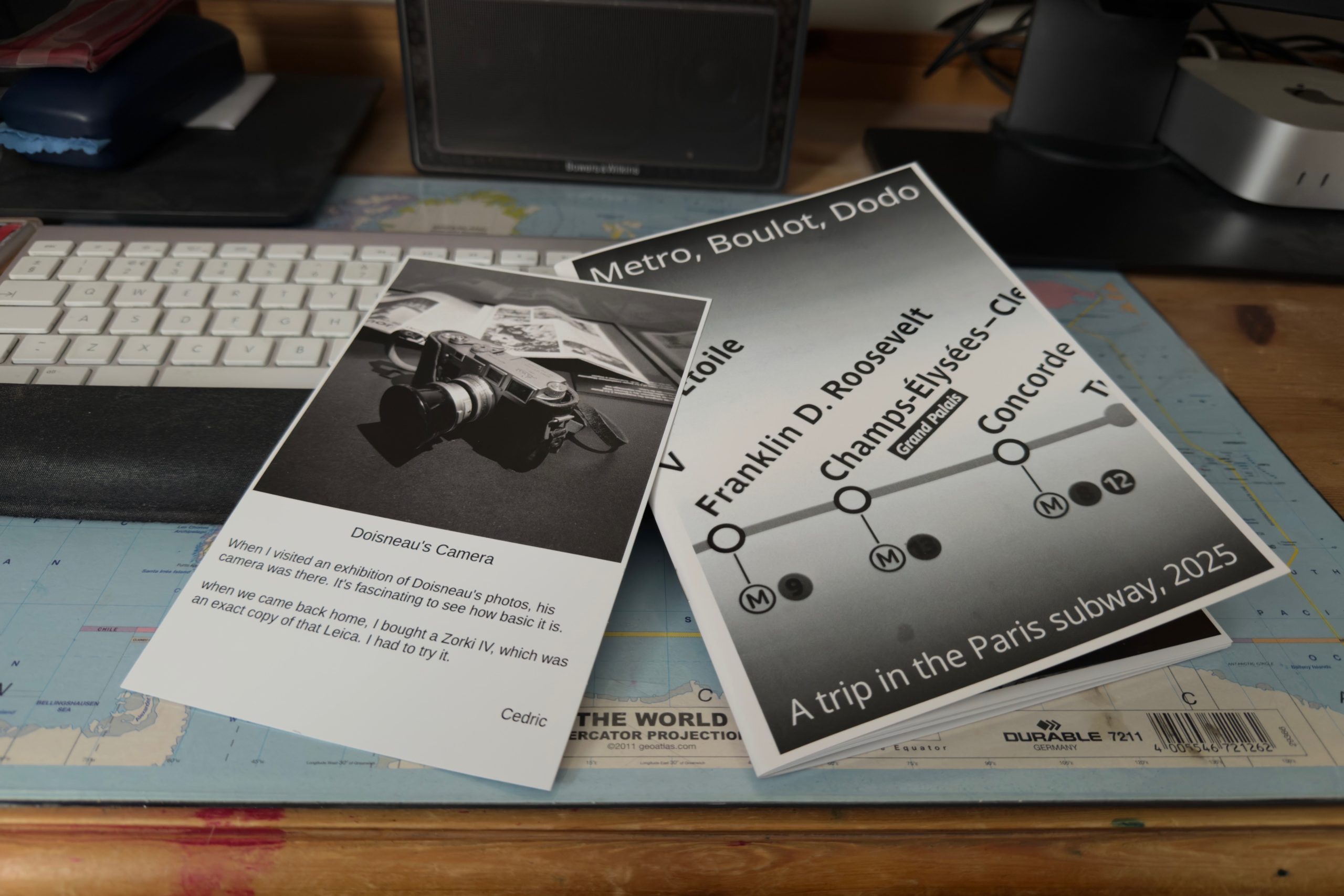
Most media formats from that era have either disappeared or been absorbed beyond recognition into the content machine. Zines didn’t. They went underground, survived, came back, and some of the most interesting visual work being published today exists in that format: small editions, specific visions, made by photographers who aren’t waiting for a gallery or a publisher to validate them. I’ve been collecting photography zines for a while now, Jill, Marc Wilson, Yasumi Toyoda, and many others, and each one is a small world unto itself, proof that the format still does something Instagram and photo books can’t quite replicate. A zine is intimate in a different way. It’s a decision held in your hands: I made this, I printed it, I chose every frame.
For some time I’ve been making photo books from my own work, and more recently I’ve started making zines as well. Somewhere in that process I kept returning to the same thought: this ought to be a conversation, not a monologue. The zine tradition has always been communal at its core, even when it looks like a solo act. One person makes a thing, another finds it, a third responds. That was true of the bulletin board ping-pong, and it was true of meeting a stranger who’d read my FTP-distributed “humour” magazine and knowing somehow that the signal had gotten through.
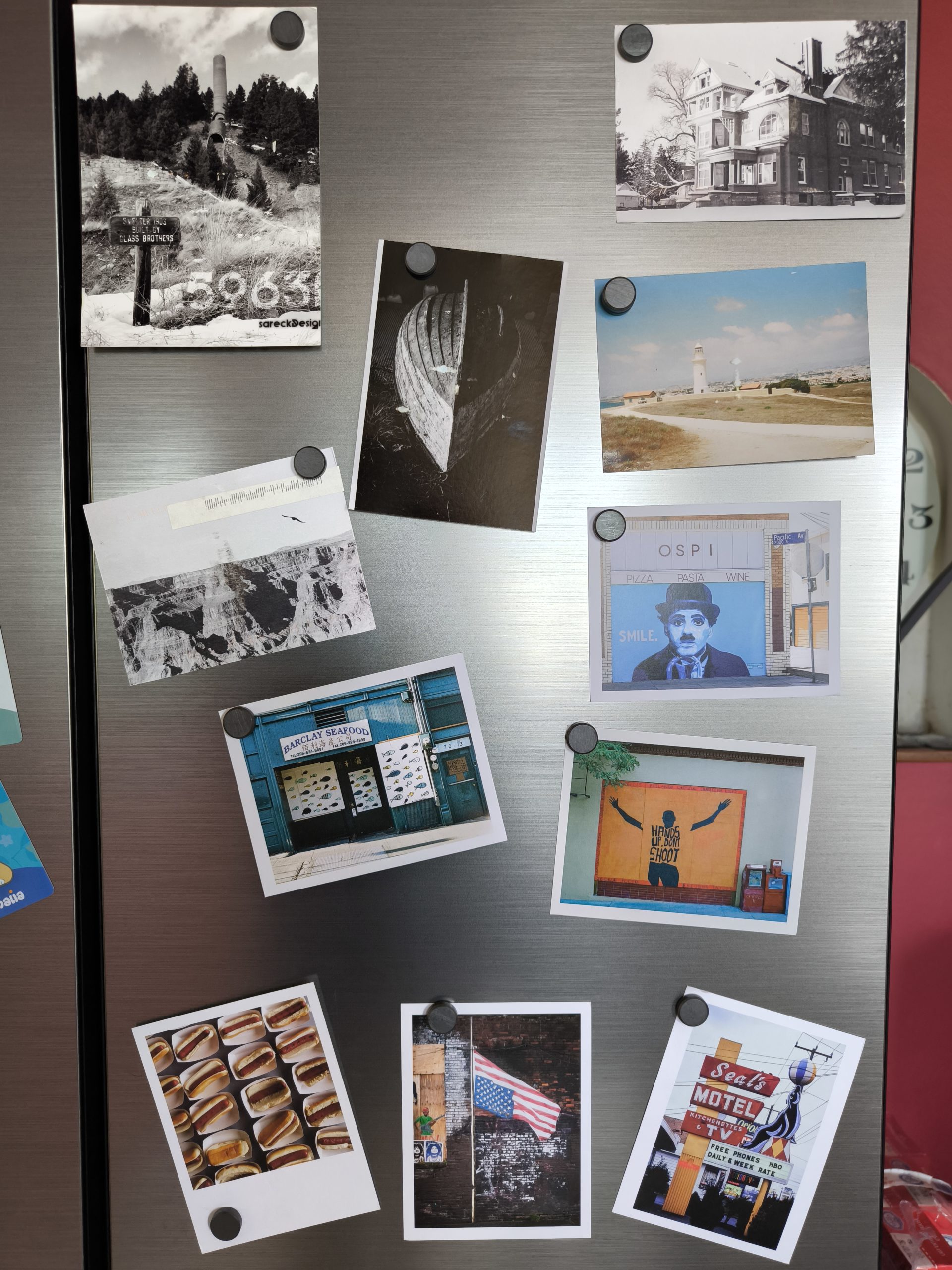
A few months ago I started the Postcard Exchange Club where participants make postcards from their own photographs and post them to strangers. We have a round every couple of months to allow time to prepare and print. What I didn’t fully anticipate was how much fun it would be to receive them. There’s something about opening an envelope and finding an image that someone chose, printed, addressed and sent to you specifically, a person they’ve never met, that feels genuinely generous in a way that a liked photo on a screen never quite manages.
It got me thinking. If that works with postcards, why not with zines? The same impulse, a bit more room to breathe. It would be more expensive, but with folded zines the cost can be kept down. It’s just a matter of having a story to tell.
So I’m curious: who out there is already making photography zines? Who’s been collecting them and thinking about making one? Who would want to exchange them with strangers, to send something they made and receive something they didn’t expect? If that sounds like you, or even like something you might want it to be you, comment below and introduce yourself. I’d love to know who’s here.
#Photography #Zine #Opinion #IMayBeWrong