
Photographers will tell you a good photograph needs to stand on its own. No explanation, no supporting text; what’s in the frame is what you get. If the image only works when you explain it, the thinking goes, it has already failed.
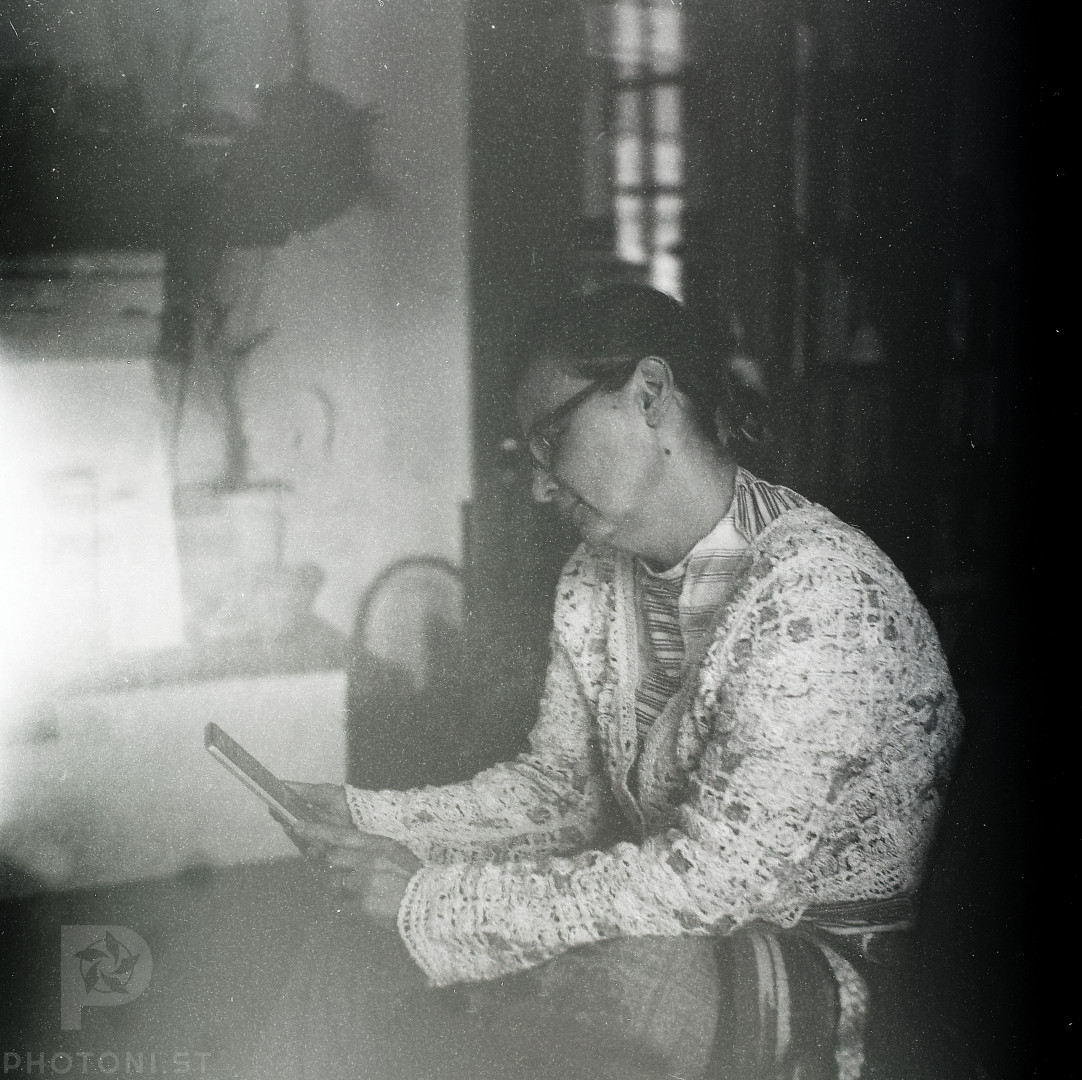
There’s a problem with this I can’t get around, which is that I can’t see my photographs the way strangers do. Every image comes preloaded with memory: the light that morning, what I was trying to do, the specific difficulty of getting the shot. That information is inseparable from my perception of whether the image works. I’m not evaluating a photograph; I’m evaluating a memory with a photograph attached, and those are not the same thing.
Personal work operates this way by nature. When you make photographs for yourself, the image carries meaning that’s partly visible in the frame and partly located in your relationship to the moment. When you look at it later, you’re not reading composition and light in isolation; you’re accessing everything you felt when you made it. The photograph and the memory fuse, which means what you’re really assessing is the photograph-plus-memory, not the photograph alone.
This doesn’t make those images better or worse. It makes them a different kind of object. An image can be unremarkable to everyone who sees it while being genuinely significant to you. That isn’t a failure; it’s photography serving a private purpose.
The doctrine that photographs must stand alone reflects assumptions worth examining. It presupposes that photography’s primary value is immediate visual impact: that images exist to be encountered cold by strangers who bring nothing beyond what’s in the frame. That model fits certain work well, gallery photography, editorial, images selected for publication. Treating it as universal creates problems, particularly when you’re trying to evaluate your own work honestly.
The problem crystallises when you’re deciding what to show. You need to assess whether an image functions independently of your attachment, but how do you create that distance when the context is embedded in how you see it?
Time is the most reliable partial solution. Images made years ago carry less emotional weight; the context recedes and you start to see them more as objects than as memories. Work I was convinced was strong sometimes looks ordinary five years on, once the circumstances have stopped mattering quite so much. The reverse also happens: images I dismissed early can reveal qualities I couldn’t see when I was too close to them.
Other people’s reactions are more uncomfortable but more direct. Show the image to someone who knows nothing about it and observe carefully. Does it hold their attention for more than a second? Are their questions ones of genuine engagement rather than polite acknowledgment? Their response tells you whether the image communicates without your context, and the honest answer is often that it doesn’t, that what you value in the photograph simply isn’t visible to anyone else.
Comparison creates evaluative pressure of a different kind. Put the image next to your other work, or next to photographs you admire, and notice how it holds up. If it consistently feels weaker in that company, the strength you perceive is probably coming from memory rather than from what’s in the frame. Worth doing alongside this: try describing the image as if seeing it for the first time, accounting for what the composition actually does, where the light falls, what feeling it produces purely through visual means. Engaging with what’s there rather than what you remember is often clarifying, occasionally deflating.
None of this fully resolves the problem because the context isn’t wrong. The photograph really does carry that history for you; that’s part of what it is as an object in your life. What matters is what you’re trying to do with it.
For personal work, the context is legitimate and should matter. You can keep photographs that mean something to you even knowing they wouldn’t communicate to others. That’s not a failure of critical judgement; it’s photography serving a private purpose. For public presentation, the standard is different. The viewer won’t have your context and the image has to deliver through what’s visible: composition, light, subject, moment. Work that requires explanation to function is probably not ready to be shown.
The difficulty is that most of us want both simultaneously. We want our photographs to be personally meaningful and publicly effective, and sometimes those qualities genuinely converge: what moved you to make the image is also what makes it visually alive for a stranger. That convergence is what the best personal photography achieves. But it requires the feeling to be encoded in the frame, not just held in the photographer’s memory.
Often there’s a gap. The image matters for reasons not visible in the frame, and craft can’t bridge that distance for strangers. You remember the cold morning, the long wait, the brief moment when everything aligned. None of that is in the photograph; what’s in the photograph is a competent image that doesn’t distinguish itself from thousands of similar ones.
When that gap exists, the choice is simple to describe and difficult to make: keep the image for yourself because it matters personally, or leave it out of your public work because it doesn’t communicate independently. The mistake is keeping images in a public portfolio because they mean something to you while knowing they don’t work visually. That’s attachment masquerading as judgement.
I still find this hard. There are photographs in my archive that I know don’t function publicly but that I value for reasons bound up in their making. What I’ve come to accept is that these two categories do exist and that many images will only ever belong in the first one. The useful discipline is learning to ask which category you’re dealing with: am I valuing this because of what’s in the frame, or because of what I remember about making it? That question doesn’t always change what I do with the image. It changes how honestly I understand my own relationship to it, which is probably as close as I’ll get to separating the photograph from its birth.
#Photography #IMayBeWrong #Opinion #PhotographyTheory