
Digital photography gave us something film never had: an instant undo button for our own judgement. See an image on the back of the camera, decide it fails, press delete, and it’s gone. Film made destruction harder; you could bin a print, but the negative sat in its sleeve unless you went out of your way to cut it up. That friction protected work from impulsive decisions. We’ve lost it.
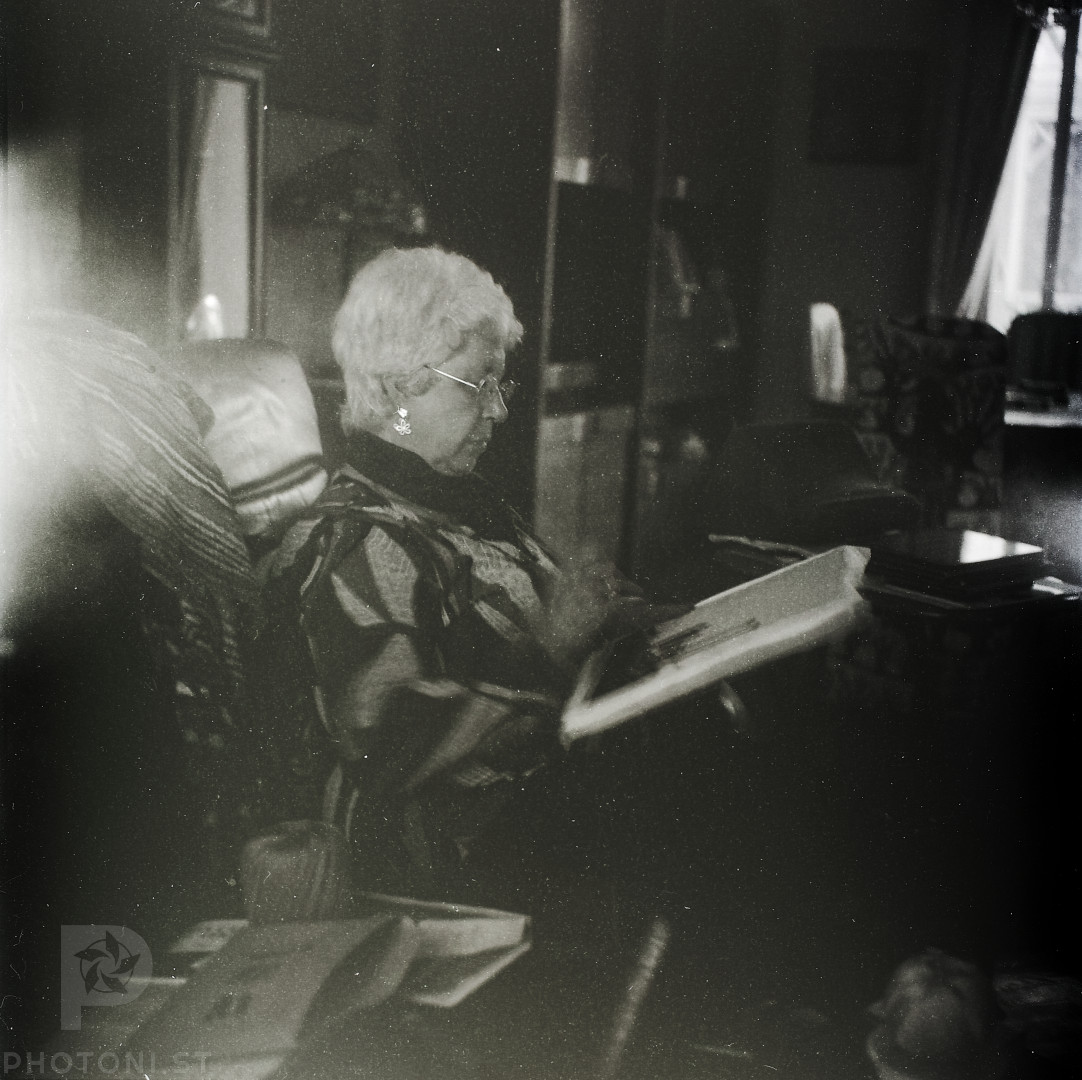
I stopped deleting in the field years ago, and the archive built since contains many photographs I initially considered worthless. Some still are. A meaningful number turned out useful, interesting, or occasionally good. The images hadn’t changed; I had.
Taste is not stable. I spent years rejecting frames because colour relationships felt off, then moved to black and white and found images I’d nearly discarded reading as compositionally interesting. The colour problem simply disappeared; the structure, which I’d overlooked entirely while fixating on something else, became the point. Nothing in the photograph had changed. My framework for reading it had.
The same instability cuts across everything. A frame rejected because it didn’t suit the current project turns out to be exactly what’s needed for work not yet conceived. Technical problems that once seemed disqualifying either become irrelevant or become the quality you were actually after. Intention stops feeling like a criterion and you start looking at what an image actually contains. You delete now with the eyes you have today. Those eyes will change.
A complete archive also shows how you actually developed: not the edited highlights, but the real sequence of attempts, half-successes, failures, and abandoned experiments. Looking back through work from periods when I was genuinely struggling, I can see patterns invisible in the polished portfolio: compositional errors I was repeating without realising it, ideas abandoned before they resolved, threads I’d been following without knowing I was following them. A curated archive of your best work looks coherent but tells you nothing about how those images were reached; the evidence of process is exactly what you’ve deleted.
Keeping everything also changes how you shoot. Without deletion as a fallback, decisions at the shutter carry slightly more weight: not enough to cause hesitation, but enough to build a different quality of discipline. The delete button permits carelessness because any consequence evaporates immediately. Removing it doesn’t constrain you; it focuses you.
The standard objection is organisation. Volume makes retrieval harder, and an uncurated archive becomes noise. Both are fair, but neither is decisive. Storage costs almost nothing now, and basic chronological folders handle retrieval well enough. Maintaining a complete archive takes minimal effort. Realising you deleted something you later needed is a different kind of cost entirely.
What digital photography did was hand us a mechanism for making permanent decisions on temporary judgement. Give your future self the material to work with.
#Photography #Opinion #IMayBeWrong #PhotographyTheory