The standard advice for lens selection follows a simple formula: match the focal length to the genre. Portraits need 85mm or longer. Landscapes want 20mm or shorter. Street photography lives at 50mm. This reasoning isn’t entirely wrong, but it misses the more important variable: you.
I don’t normally talk about specific gear because it’s a pointless discussion that is more suited to YouTube resellers than photographers. But there is one aspect that is often missed in gear selection: your personality. It is the most important factor in lens choice and many people ignore it, way more important than getting the latest hardware.
Obviously some practical limits exist. Taking a 24mm lens to photograph birds would be absurd. Hauling a 600mm prime into crowded streets would make you functionally blind. The activity sets boundaries. But within those boundaries, the decisive factor isn’t what you’re shooting. It’s how you see.
Ignoring your own visual nature whilst chasing the requirements of a genre leads to two problems. First, you’ll fight your equipment constantly, forcing yourself into a way of seeing that doesn’t match your instincts. Second, your images will feel contrived because they’re built on someone else’s vision rather than your own.
When I decided to move from landscape to street photography, I faced this choice directly. I’d settled on my cameras, no need to change what I knew, and then reached for the obvious lens: 50mm. That’s what the great street photographers used. That’s what gets recommended. Safe choice.
The moment I started shooting, I knew it was wrong. The focal length was too long for me. At 50mm, my attention gets pulled forward, isolating subjects and cutting away context. The lens forces me to see in a way I don’t naturally see. It makes me hunt for single elements instead of relationships.
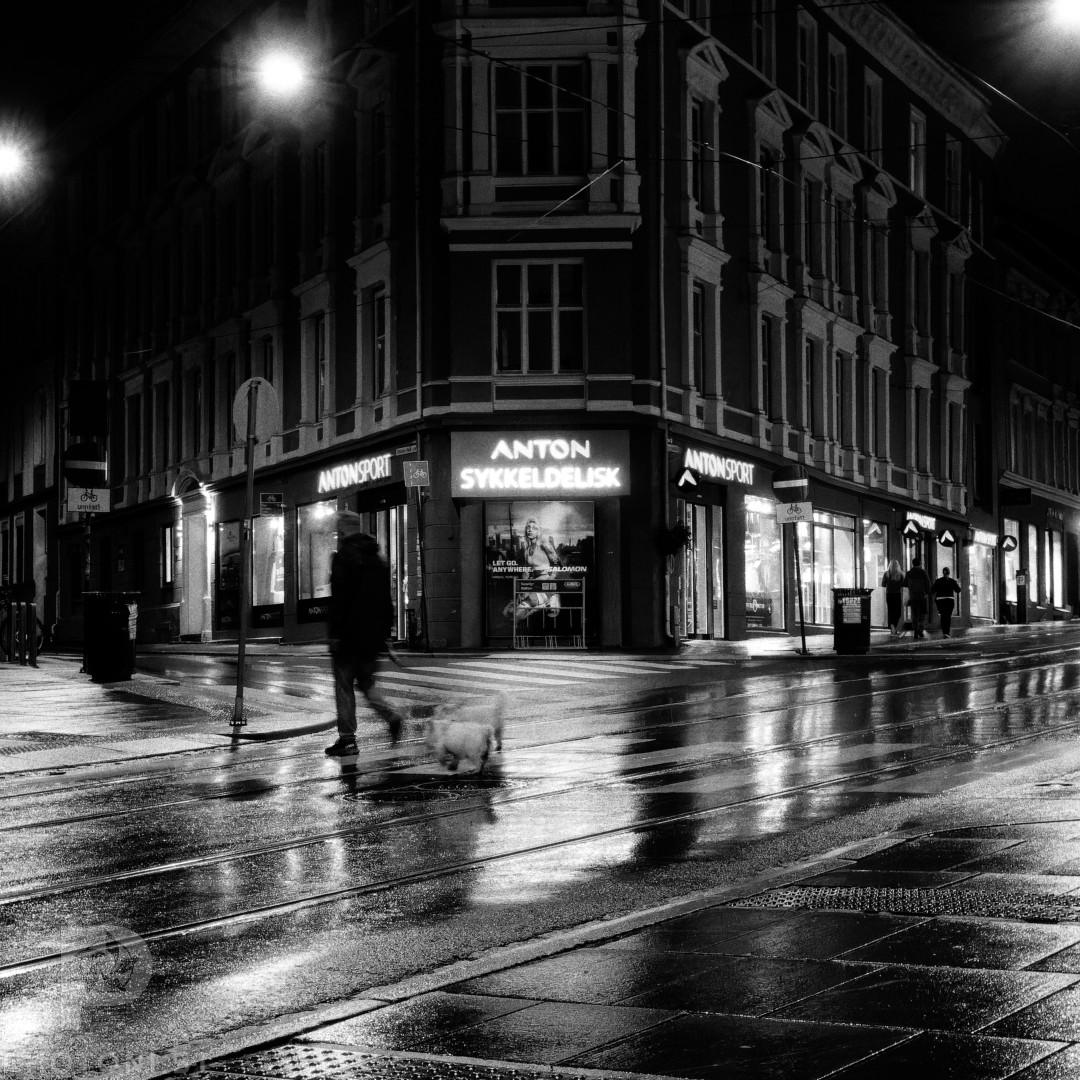
My vision sits at 28mm. That’s longer than I’d choose for landscapes, where I’d go to 16mm on full frame or 10mm on crop sensors, but it’s substantially wider than the street photography standard. Many photographers consider 28mm messy. It demands attention to the edges of the frame, to background elements, to how subjects relate to everything around them. It’s supposedly difficult.
But that difficulty is exactly what I want. I need to think about the background because the background matters to me. I want the environment included because I’m interested in showing where people exist within the world, not extracting them from it. The complexity that makes 28mm hard for some photographers is what makes it right for me.
This isn’t an argument that 28mm is superior to 50mm. It’s an argument that my 28mm is superior to someone else’s 50mm when I’m the one holding the camera. The focal length that suits your way of seeing will produce better work than the focal length that theoretically suits the activity.
Unless I shoot medium format, I always shoot at 28mm: with my phone, with my RX100, with my DSLRs. Even when I have a zoom lens (on the RX100, for instance), I forget about it and just walk when I want to reframe. I nearly never use the zoom and sometimes realise I have one after the fact, having not needed it to get the frame I wanted.
Work out how you actually look at scenes before you’re holding a camera. Do you isolate details or take in the whole? Do you focus tightly or scan broadly? Are you drawn to relationships between elements or to single subjects? Your natural way of observing the world should drive your lens choice more than any genre convention.
The activity sets the general boundaries. Your vision determines where you operate within those boundaries. Choose accordingly.
#Photography #Opinion #IMayBeWrong #PhotographyTheory #Gear